

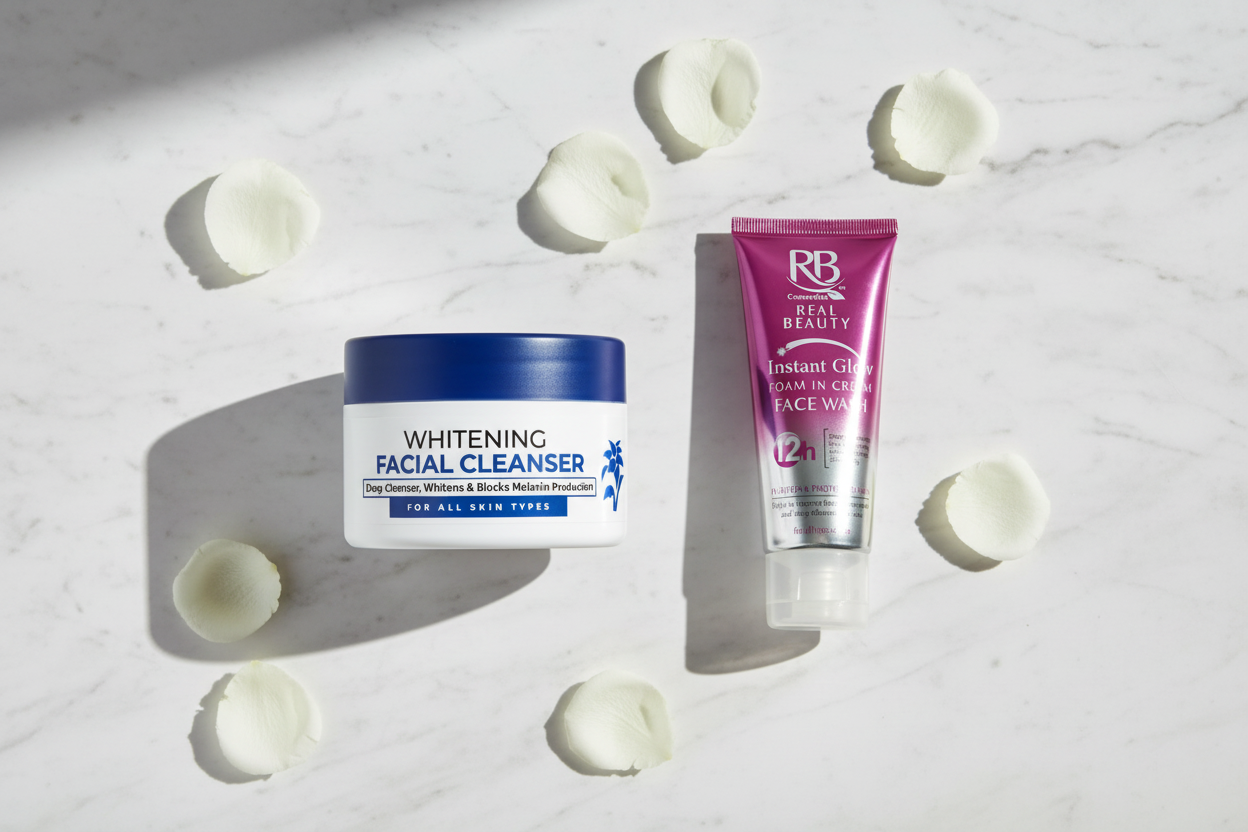
Face cleanser and face wash sit in the same aisle, but they are not always the same type of product. The words are often used interchangeably, which is why routines can feel confusing and inconsistent.
In most skincare lines, a face cleanser is designed to dissolve and lift buildup with minimal disruption, while a face wash is designed to wash away oil and debris with a more noticeable cleansing feel. The best daily choice depends on skin type, sensitivity and the kind of residue you need to remove.
What A Face Cleanser Is?

A face cleanser is a product made to clean the skin while supporting the barrier. Many cleansers focus on gentle surfactants, skin identical lipids and hydration helpers so skin feels comfortable after rinsing.
Cleansers often target sunscreen, makeup, pollution particles and everyday grime without leaving skin tight. They are commonly found in cream, milk, gel cream, oil cleanser, cleansing balm and micellar formats.
What A Face Wash Is?

A face wash is typically formulated to create a stronger cleansing effect and often foams or lathers more. It is built to reduce surface oil and give a squeaky clean finish, which some people prefer.
Face washes often suit very oily skin, sweaty days and situations where heavy sebum and dirt build up quickly. If the formula is too stripping, it can trigger dryness, irritation, or rebound oiliness.
Key Differences In Texture And Feel
Texture is one of the easiest ways to spot differences. Cleansers often feel creamy, silky, or cushiony, while face washes often feel lighter and more sudsy.
Finish is the second clue. A cleanser usually leaves a soft, comfortable feel, while a face wash can leave skin feeling very clean and sometimes slightly tight if the surfactants are strong.
How Surfactants And Cleansing Power Work?
Both products use surfactants to lift oil and debris so they can rinse away with water. The difference is usually the surfactant blend, concentration and the supporting ingredients around it.
Milder surfactants and more conditioning agents usually create a cleanser that feels gentler. Stronger cleansing systems and higher foam often create a face wash that removes oil more aggressively.
How pH And The Skin Barrier Matter?
Your skin barrier relies on a slightly acidic surface to support healthy enzymes and a balanced microbiome. When cleansing is too harsh, the barrier can weaken and the skin may feel raw, dry, or stinging.
Many modern formulas aim for a skin friendly pH and add ingredients that reduce post cleanse dryness. Even with a good pH, over cleansing or using hot water can still stress skin.
Which One Is Better For Daily Use?
Daily use should prioritize comfort, consistency and barrier support. For many people, a gentle face cleanser works well morning and night because it cleans without pushing skin into irritation.
A face wash can be a solid daily option for oily, resilient skin, especially in humid climates or during active seasons. The right choice is the one that cleans thoroughly while leaving no tightness, burning, or flaking.
Choosing Based On Skin Type

Skin type should guide how strong your cleansing needs are. The goal is to remove what is on the surface without removing what your skin needs to stay calm and balanced.
- Dry skin: Choose a cream or gel cream cleanser with glycerin, ceramides, or squalane and avoid high foam formulas.
- Oily skin: Choose a gel cleanser or face wash with a balanced surfactant system and consider niacinamide or zinc support.
- Combination skin: Use a gentle cleanser daily and reserve a stronger face wash for very oily days if needed.
- Sensitive skin: Use a fragrance free cleanser with minimal actives and avoid rough scrubs and high menthol cooling agents.
- Acne prone skin: Use a non comedogenic cleanser and add acne actives carefully so cleansing stays supportive, not harsh.
Once you match cleanser strength to skin type, the rest of your routine becomes easier to keep stable.
Choosing Based On Ingredients
Ingredient labels can reveal whether a product is likely to be gentle or more stripping. Look for hydration, barrier lipids and soothing agents when skin is dry or reactive.
Common supportive ingredients include glycerin, hyaluronic acid, panthenol, ceramides, cholesterol, fatty alcohols, allantoin and colloidal oatmeal. These can help reduce the tight feeling that sometimes follows cleansing.
Ingredients often seen in oil control focused face wash formulas include stronger foaming surfactants and higher levels of oil absorbing or astringent helpers. If your skin feels squeaky or looks dull after washing, the formula may be too strong for daily use.
Face Cleanser Vs Face Wash Comparison Table
| Feature | Face Cleanser | Face Wash |
|---|---|---|
| Primary Goal | Lift residue while supporting comfort | Remove oil and debris with a stronger cleanse |
| Typical Texture | Cream, milk, oil, balm, gentle gel | Foaming gel, foam, or lathering liquid |
| Best Fit | Normal, dry, sensitive, or barrier stressed skin | Oily skin, heavy sweat, or high sebum days |
| Post Rinse Feel | Soft and comfortable | Very clean, sometimes tight if over cleansing |
Use the table as a quick check, then confirm your choice by how your skin feels one hour after cleansing.
Morning Vs Night Cleansing

Morning cleansing is usually about refreshing skin and removing overnight oil and skincare residue. If you wake up dry or tight, rinsing with lukewarm water or using a very gentle cleanser can be enough.
Night cleansing has a bigger job because it needs to remove sunscreen, makeup, sweat and pollution. Many people do best with a gentle cleanser at night, or a two step cleanse when wearing long wear products.
When Double Cleansing Helps?
Double cleansing means starting with an oil based cleanser or balm, then following with a water based cleanser. It can be useful when sunscreen or makeup is stubborn and tends to cling to skin.
Keep both steps gentle so the total routine is not too aggressive. If your skin gets tight or stingy afterward, reduce frequency or switch the second step to a milder cleanser.
Common Mistakes That Make Any Cleanser Feel Harsh
Even a well formulated product can irritate if technique is off. Small routine changes can make cleansing more effective while staying comfortable.
- Using hot water: It can increase dryness and redness and can worsen sensitivity over time.
- Over cleansing: Washing too often can strip oils and trigger rebound oiliness.
- Scrubbing: Rough cloths and aggressive rubbing can damage the barrier and worsen acne marks.
- Too much product: A larger amount does not clean better and can leave residue that feels itchy.
- Skipping moisturizer: Cleansing should be followed by hydration to reduce transepidermal water loss.
Better technique often solves the problem before you need to replace your entire routine.
How To Tell If Your Daily Choice Is Working?
The right product leaves your skin clean but calm. After cleansing, skin should feel comfortable, not tight, squeaky, or itchy.
Watch for warning signs like flaking around the nose, stinging when applying a simple moisturizer, or increased redness. If these show up, move toward a gentler face cleanser and reduce strong actives until your barrier settles.
Conclusion
Face cleanser vs face wash comes down to cleansing strength, texture and how your skin responds after rinsing. Cleansers are usually the safest daily default for most skin types because they support the barrier while still removing buildup.
Face washes can be a great daily choice for oily skin or high sweat routines, as long as they do not leave tightness or irritation. Choose the option that keeps your skin steady, then pair it with moisturizer and daily sunscreen for a balanced routine.


