

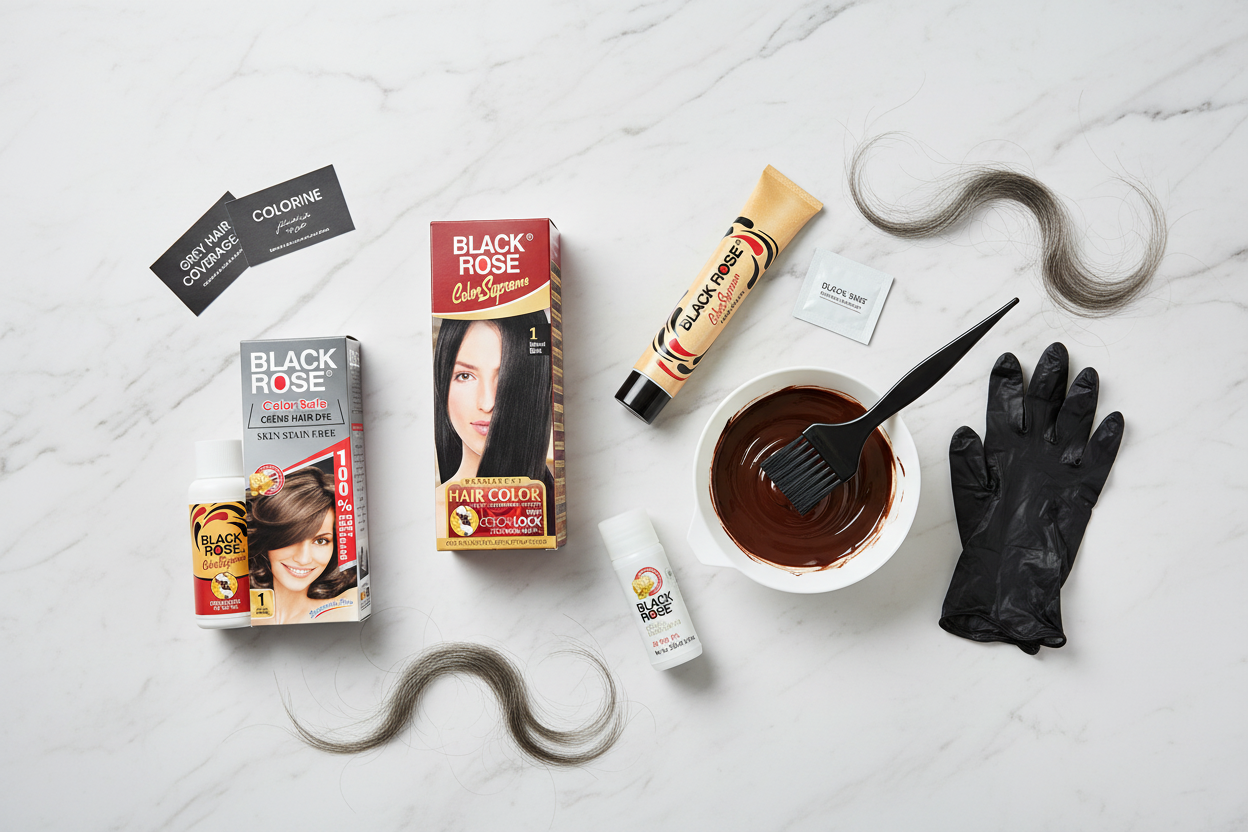
Grey coverage at home can look soft and believable when you choose the right tone, formula and timing. The goal is even coverage at the roots, a natural blend through the lengths and a finish that matches your skin undertone and existing hair color.
This guide breaks down what works best for covering grey hair at home, from shade selection to aftercare. It also helps you avoid common mistakes that cause flat, overly dark, or brassy results.

How Grey Hair Behaves With Color?
Grey hair often has a tighter cuticle and less natural pigment, so it can resist dye and fade differently than pigmented strands. Some people notice greys look brighter at the crown and temples, while the rest of the hair holds color more easily.
Because greys reflect light, the wrong shade can look harsh even when coverage is technically complete. Choosing the right depth and undertone matters as much as choosing a formula.
Natural Looking Shade Selection
For the most natural result, stay close to your current level rather than jumping dramatically darker. Many at-home dye results look artificial because the shade is too deep and too solid across the head.
Aim for a tone that mimics natural dimension. Neutral, soft warm and soft cool shades usually blend best with grey regrowth.
Match Depth Before You Match Tone
Depth is how light or dark a shade looks. If you are between two shades, the lighter option is often safer for a natural finish and easier upkeep.
Going too dark can make the hairline look sharp as greys grow in. It can also emphasize thinning near the part.
Choose An Undertone That Flatters Skin
Undertone controls whether a color reads golden, ash, neutral, copper, or red. A neutral or slightly warm brown often hides greys without looking flat, while very ashy tones can read dull on some complexions.
If you pull warm easily, choose neutral or cool-leaning shades to reduce brass. If your hair looks washed out with cool shades, choose a soft warm shade instead of intense gold.
Best Hair Color Types For Grey Coverage At Home
Different formulas cover grey hair differently. The best hair color for grey hair coverage at home depends on your percentage of grey, hair texture and how long you want results to last.
Permanent dye gives the strongest coverage, while demi-permanent and gloss options blend greys with a softer transition. Root touch-up products can be useful between full applications.
| Hair Color Type | Grey Coverage Strength | Best Use At Home |
|---|---|---|
| Permanent Cream Color | High, most reliable | Stubborn grey roots and full coverage when you want longer-lasting results |
| Demi Permanent Color | Medium, blends | Softening greys, refreshing faded mids and ends, less harsh regrowth line |
| Root Touch Up Kit | High on targeted areas | Quick coverage along part and hairline between full color sessions |
| Color Depositing Mask Or Gloss | Low to medium, tones | Adding shine and tone, minimizing contrast, maintaining color between dyes |
Once you choose a formula, your application method determines whether coverage looks seamless or patchy. A few technique changes can dramatically improve results.
What Makes Coverage Look Natural Instead Of Solid?

Natural hair color has variation, even in dark shades. At home, the most common issue is making roots and lengths the exact same density and tone.
To keep dimension, focus on covering greys where they live most, while treating the rest of the hair more gently. That usually means different timing for roots versus lengths.
Root First Timing Helps Grey Coverage
Grey regrowth typically needs the longest processing time. Applying to roots first helps ensure they reach full depth without over-darkening the ends.
If your ends are already colored, pulling permanent dye through every time can build up and look inky. Use a gentler refresher on lengths when needed.
Soft Hairline Blending Matters
The hairline is where harsh color looks most obvious. A shade that is slightly lighter or more neutral at the front can look more believable than a deep, saturated application.
Apply carefully at the temples and around the ears, then use a light hand when combing through. Over-saturating fine baby hairs can create a painted look.
Choosing The Right Shade Family For Common Grey Patterns
Grey coverage is not only about how much grey you have, but where it sits. Many people see concentrated grey at the part, around the face, or at the crown.
Choosing a shade family that matches the rest of your hair reduces contrast and makes regrowth less noticeable.
Natural Browns For Balanced Coverage
Neutral brown shades are a dependable option for natural results. They tend to cover greys evenly without pushing too warm or too cool.
If you want a softer finish, choose a light to medium brown rather than very dark brown. The lighter depth can still cover while reducing the sharp root line.
Dark Blonde And Light Brown For Softer Regrowth
If you are naturally in the dark blonde to light brown range, staying within that family can make grey blending easier. It reduces contrast and makes coverage look airy instead of heavy.
Be cautious with very ashy shades if your hair turns greenish or dull. Neutral beige tones often look more natural on most hair types.
Black And Very Dark Shades With Care
Very dark shades can cover grey strongly, but they can look solid and make regrowth more obvious. They can also highlight scalp visibility at the part.
If you love a dark look, consider the softest version of that shade family, such as soft black or natural black. Keep the finish glossy, not flat.
At Home Application Tips That Improve Grey Coverage
Better technique improves coverage even when you use the same box dye. Prep, sectioning and saturation make a bigger difference than most people expect.
Plan your application so you do not rush. Grey coverage needs steady timing and consistent placement.
- Start with dry hair unless your kit says otherwise. Many formulas are designed for dry application to control dilution and improve deposit.
- Section into four quadrants. Clean partings help you reach grey pockets at the crown and hairline without missing spots.
- Saturate stubborn areas first. Temples and part lines often need extra product and more careful placement.
- Use enough product. Under-applying is a common reason greys look translucent or patchy after rinsing.
- Rinse thoroughly and condition well. Residual dye can dull shine and leave the scalp feeling tight.
These basics set you up for even color. The next key is choosing the right developer strength, which is handled for you in most at-home kits but still matters in results.
Developer Strength And Processing Time

Most permanent at-home kits are built around a standard developer strength that targets grey coverage. If your greys are resistant, the issue is often timing and saturation rather than needing a stronger formula.
Do not cut processing time short. Greys can look covered while wet, then appear lighter once dry if they did not process fully.
When To Refresh Lengths Without Overprocessing?
If your mids and ends are faded, consider using a demi-permanent shade in a similar tone to refresh. This adds shine and tone with less buildup than repeatedly applying permanent dye over old color.
If your lengths look healthy and your main concern is regrowth, focus only on a root touch-up instead of full-head application.
How To Avoid Brassiness And Flat Color?
Brassiness happens when underlying warmth shows through or when the shade choice is too warm for your base. Flat color happens when everything is one tone with no variation.
Picking a neutral shade and maintaining it with the right shampoo routine helps keep color looking expensive and natural.
- Choose neutral over intense warm. Neutral browns and neutral dark blondes tend to age better and blend greys more softly.
- Use a toning shampoo only when needed. Purple can help with yellow tones on blondes and blue can help with orange tones on brunettes, but overuse can dull hair.
- Protect hair from heat. Frequent hot tools fade dye faster and can pull warm tones forward.
With the shade set, aftercare becomes the main factor in how long your coverage stays smooth. A few habits can slow fading and keep shine high.
Aftercare For Longer Lasting Grey Coverage

New color looks most natural when it stays glossy and even. Harsh cleansers, frequent washing and high heat can roughen the cuticle and speed up fading.
Choose routines that protect both your color and your scalp. Scalp comfort matters because irritation can make you rush applications or avoid needed touch-ups.
- Wash less often when possible. Fewer wash cycles generally mean slower fade and better grey blending.
- Use color-safe shampoo and conditioner. Gentler formulas help preserve tone and reduce dullness.
- Add a weekly deep conditioning treatment. Hydration improves shine so color looks more natural and less opaque.
- Shield hair from sun and chlorine. UV exposure and pool chemicals can shift tone and increase brass.
When you maintain tone and shine, even simple at-home color can look more dimensional. That makes root regrowth feel less urgent and more manageable.
Conclusion
The best hair color for grey hair coverage at home is the one that matches your depth, complements your undertone and suits your grey pattern. Permanent color is the strongest option for stubborn greys, while demi-permanent and gloss products blend and soften regrowth with a gentler finish.
For natural-looking results, focus on root timing, careful saturation at the hairline and aftercare that protects tone and shine. When you keep the color close to your natural level and avoid extremes, grey coverage looks smoother and more believable.


