

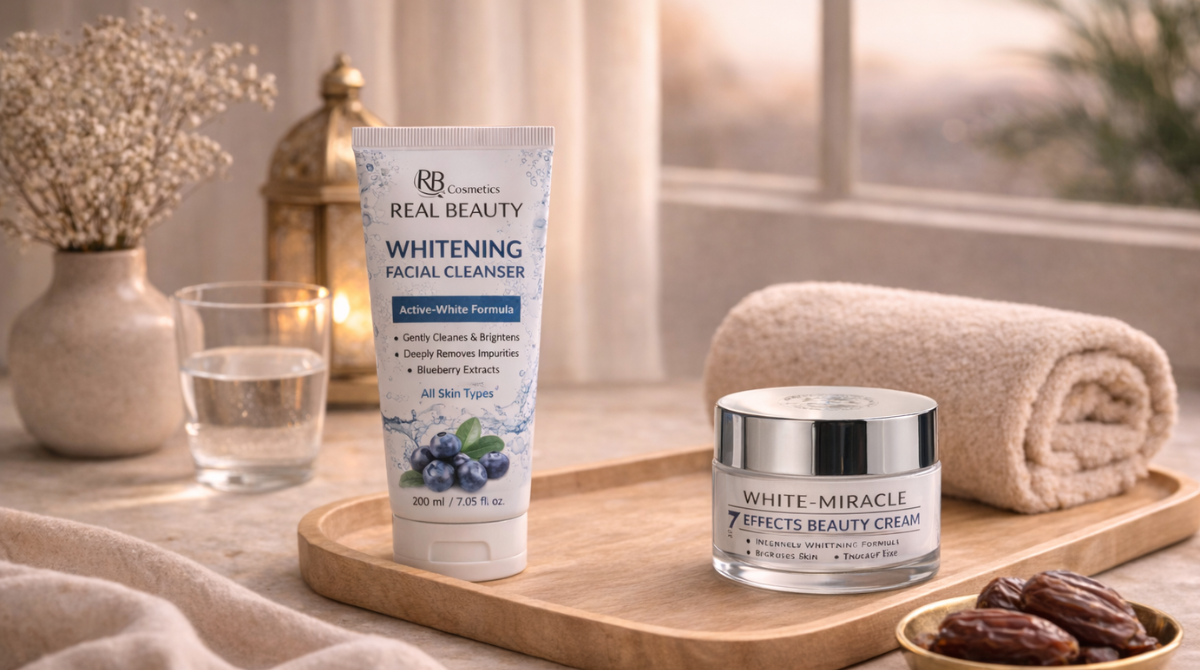
Fasting changes your daily rhythm and your skin often feels those changes first. A well-planned Ramadan skincare routine can keep your complexion fresh, comfortable and even-toned while your eating and sleeping windows shift.
The goal is not to use more products. It is to use the right basics at the right time, protect your skin barrier and support hydration with smart meals and gentle habits.
Why Skincare Is Important During Ramadan?
During Ramadan, many people sleep less, drink water in a shorter window and spend more time indoors under dry air. These changes can weaken the skin barrier, making skin look dull or feel tight.
Consistent skincare helps your skin hold water better, stay resilient and recover faster from daily stressors. It also reduces the chance of irritation from over-washing or strong actives used at the wrong time.
How Fasting Affects Your Skin?
Fasting does not directly damage skin, but the routine around fasting can. Dehydration, altered cortisol patterns and late nights may increase dryness, breakouts and under-eye puffiness.
Oilier skin may feel temporarily less greasy, yet still become dehydrated, which can trigger more oil later. Dry and sensitive skin often feels tighter and may flush more easily if the barrier is already compromised.
Common Signs Your Skin Needs Extra Support
- Tightness after cleansing. This often signals a compromised barrier or an overly stripping cleanser.
- Patchy dryness. Cheeks and around the mouth can become flaky when water intake drops.
- Dull tone. Slower cell turnover and fatigue can reduce glow.
- More breakouts. Sleep disruption and heavier iftar foods can affect congestion.
Once you identify what is changing, you can adjust products and timing without overcomplicating your routine.
Morning Skincare Routine During Ramadan

Morning skincare during Ramadan should feel light, protective and calming. Think of it as setting your skin up to stay comfortable until iftar.
If you wake up very early for suhoor, keep the routine minimal and avoid heavy layers that can feel greasy later. If you sleep after suhoor and wake later, follow the same routine right after washing.
- Gentle cleanse or rinse. Use a mild cleanser if you feel oily, or rinse with lukewarm water if your skin is dry and calm.
- Hydrating layer. Apply a simple hydrating toner or serum with glycerin or hyaluronic acid to reduce tightness.
- Moisturize to seal. A lightweight cream or aloe vera lotion, like those formulated for daily hydration at BlackRose.pk can help lock in moisture without clogging pores.
- Daily sunscreen. Use broad-spectrum SPF and apply enough to cover face and neck evenly.
Keep fragrance low, avoid harsh scrubs and aim for comfort over aggressive treatment in the daytime.
Quick Adjustments By Skin Type
- Oily and acne-prone. Use a gel moisturizer and consider niacinamide in the morning for oil balance.
- Dry and dehydrated. Layer a hydrating serum under a ceramide-based cream to reduce flaking.
- Sensitive and reactive. Skip strong acids in the morning and prioritize soothing ingredients like panthenol.
These small switches often make a bigger difference than adding new steps.
Night Skincare Routine After Iftar
Night skincare after iftar is your best time for deeper hydration and targeted treatment. Your skin can repair better when you are not rushing and your body has access to fluids and nutrients.
If you wear makeup or sunscreen, cleanse thoroughly but gently. Avoid very hot water, since it can worsen dryness and redness.
- First cleanse if needed. Use a balm or oil cleanser to lift sunscreen and makeup without harsh rubbing.
- Second cleanse. Follow with a gentle water-based cleanser to remove residue and sweat.
- Treatment step. Use one active at a time such as niacinamide, azelaic acid or a mild retinoid if your skin tolerates it.
- Moisturize and repair. A richer moisturizer from BlackRose.pk can add comfort while supporting overnight repair.
- Optional occlusive for dry areas. Seal flaky patches with a thin layer of petrolatum-based ointment.
When skin feels stressed, reduce actives and focus on barrier care for several nights before restarting treatments.
How To Time Actives During Ramadan?
If your skin is already dry, move strong exfoliation to once weekly or pause it entirely. Retinoids can be used after iftar, but start slowly and buffer with moisturizer to limit peeling.
Spot treatments work best at night as well, since they can be drying. Apply only on blemishes and protect surrounding skin with moisturizer.
Best Skincare Ingredients To Use In Ramadan
The best skincare ingredients to use in Ramadan support hydration, reduce irritation and keep pores clear without over-stripping. Focus on a few reliable ingredients rather than frequent product switching.
Aloe vera soothes dryness and improves skin comfort during long fasting hours.

- Ceramides. Strengthen the skin barrier and reduce water loss, especially if skin feels tight.
- Glycerin and hyaluronic acid. Improve surface hydration and plumpness when layered under moisturizer.
- Niacinamide. Helps balance oil, supports barrier health and can soften uneven tone.
- Azelaic acid. Calms redness and supports clearer pores with a lower irritation risk than stronger acids.
- Squalane. Adds lightweight comfort and reduces the rough feeling of dryness.
- Panthenol and allantoin. Soothe sensitivity and support recovery after long days.
Strong peels and frequent high-percentage acids are often less comfortable during fasting. If you use them, reduce frequency and watch for stinging or scaling.
| Skin Concern During Fasting | Ingredient Focus | Best Time To Apply |
|---|---|---|
| Tightness and dryness | Ceramides, glycerin | Morning and night |
| Dull tone | Vitamin C, gentle exfoliant | Night, a few times weekly |
| Breakouts and congestion | Niacinamide, azelaic acid | Night, consistently |
| Redness and irritation | Panthenol, allantoin | After cleansing |
Use the table to match what you see in the mirror to a focused plan. Simpler routines are easier to follow consistently throughout the month.
Diet And Hydration Tips For Healthy Skin

Skincare works best when your body has the basics it needs. During Ramadan, hydration and food choices can shift quickly, so it helps to be intentional between iftar and suhoor.
Aim for steady water intake across the evening rather than drinking a large amount at once. Pair fluids with electrolytes from food to improve absorption.
- Hydrate in intervals. Drink water regularly after iftar and again before sleep, then finish with water at suhoor.
- Prioritize water-rich foods. Include cucumbers, tomatoes, oranges and soups to support hydration.
- Choose skin-supportive fats. Add olive oil, nuts, seeds and avocado to support softness and barrier function.
- Balance sugar and fried foods. Frequent spikes can worsen inflammation and contribute to breakouts for some people.
- Include protein. Adequate protein supports repair, especially if you use actives like retinoids.
These habits also reduce late-night thirst and help your skin look calmer by morning.
Common Skincare Mistakes To Avoid During Ramadan
Many skincare issues during Ramadan come from trying to fix dryness or breakouts too aggressively. Avoiding a few common mistakes can prevent a cycle of irritation.
- Over-cleansing. Washing too often strips oils and can trigger more sensitivity or rebound oil.
- Skipping moisturizer because skin feels oily. Dehydrated skin can still look shiny, so use a light moisturizer instead of none.
- Using harsh exfoliation to fight dullness. Scrubs and frequent acids can worsen dryness and texture.
- Forgetting sunscreen on indoor days. UVA can reach skin through windows and contributes to uneven tone.
- Trying multiple new products at once. If irritation happens, it becomes hard to identify the cause.
When in doubt, return to cleanser, moisturizer, and sunscreen for several days. Once skin feels stable, reintroduce one treatment slowly.
Simple Tips To Keep Skin Fresh While Fasting
Small daily habits can keep your skin looking rested even when your schedule is packed. These tips fit into real routines without adding extra products.
- Use lukewarm water. Hot water increases dryness and redness, especially on cheeks.
- Pat dry, do not rub. Rubbing can irritate and worsen flaking around the nose and mouth.
- Keep a hydrating mist for comfort. Use it when indoor air feels dry, then seal with moisturizer at home.
- Change pillowcases more often. Cleaner fabric can reduce congestion, especially if you sweat at night.
- Protect lips. Use a plain balm and reapply after wudu or washing.
Consistency matters more than intensity. When your routine feels easy, your skin is more likely to stay clear and comfortable throughout Ramadan.
Conclusion
A Ramadan skincare routine works best when it respects your fasting schedule and protects your skin barrier. Keep mornings light with hydration, moisturizer and sunscreen, then use nights after iftar for deeper repair and carefully chosen treatments.
Support your results with steady hydration, balanced meals and gentle habits. With a simple plan and a calm approach, fresh skin while fasting becomes much easier to maintain.


