

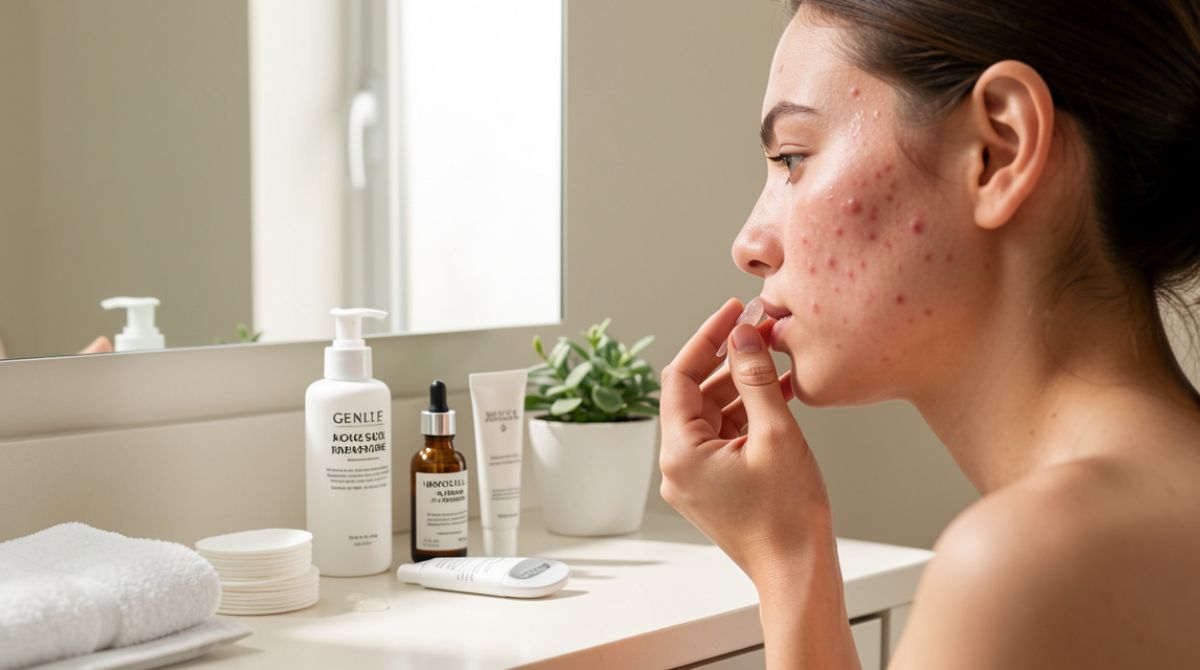
Acne and blemishes can look similar, but they do not always come from the same trigger. When you know what is happening in the pore and on the surface, home care becomes more effective and less irritating.
Most breakouts start when oil, dead skin and bacteria collect inside a hair follicle. Inflammation then decides whether you see a small clogged bump or a deeper, painful lesion.

What Causes Acne And Blemishes?
What causes acne and blemishes usually comes down to clogged pores plus inflammation. Oil production, skin cell turnover and the balance of bacteria on the skin all influence how often you break out.
Hormone shifts can increase oil and make breakouts more stubborn around the jawline and chin. Stress can also worsen acne by raising cortisol and indirectly increasing oil and inflammation.
Product habits matter. Heavy or occlusive formulas, infrequent pillowcase changes and touching the face can keep pores congested and slow healing.
What Are The Different Types Of Acne And Skin Blemishes?
What are the different types of acne and skin blemishes is important because each type responds best to a slightly different approach. Treating everything the same often leads to dryness, peeling and more redness.
Common acne types include blackheads, whiteheads, papules, pustules, nodules and cysts. Blemishes can also include post-inflammatory erythema, post-inflammatory hyperpigmentation and irritation bumps that are not true acne.
- Blackheads: Open clogged pores that look dark because the plug oxidizes at the surface.
- Whiteheads: Closed clogged pores that form small, flesh-colored bumps.
- Papules And Pustules: Inflamed bumps, with pustules containing visible pus.
- Nodules And Cysts: Deeper, painful lesions that have a higher risk of scarring.
- Dark Marks And Red Marks: Discoloration left behind after a breakout heals, not active acne.

Once you can name what you are seeing, you can choose gentler and more targeted home treatments.
What Skincare Routine Works Best For Acne Prone Skin?
What skincare routine works best for acne prone skin is usually a simple one you can repeat daily without irritation. Consistency matters more than using many actives at the same time.
Aim for a routine that protects the skin barrier while gradually reducing clogs and inflammation. If your skin feels tight or stings during cleansing, it is already too aggressive.
Daily Routine Essentials
- Cleanse Gently. Use a mild cleanser to remove sweat, oil and sunscreen without stripping the skin.
- Treat With One Main Active. Choose one acne-targeting ingredient and use it consistently before adding another.
- Moisturize. A lightweight, non-comedogenic moisturizer helps reduce irritation and supports healing.
- Wear Sunscreen Daily. UV exposure can deepen dark marks and slow recovery from inflammation.

After the basics are stable for a few weeks, you can adjust based on whether congestion or inflammation is the bigger issue.
How Can You Treat Acne At Home Naturally?
How can you treat acne at home naturally starts with reducing triggers that inflame the skin and supporting a healthy barrier. Natural care works best when it is gentle, consistent and paired with smart routine choices.
Focus on calming inflammation, minimizing friction, and keeping pores clear. Avoid harsh scrubs, strong essential oils and frequent spot picking because they tend to worsen redness and leave marks.
Supportive Natural Approaches
- Cool Compresses: Brief cooling can reduce discomfort and visible redness in inflamed spots.
- Barrier Support: Ingredients like ceramides, panthenol, and glycerin help skin tolerate acne treatments better.
- Low-Irritation Hydration: Gel-cream moisturizers can reduce flaking without feeling heavy.
Natural methods can complement proven actives, but they should not replace medical care for deep cystic acne or widespread scarring risk.
What Are The Best Home Remedies For Acne And Blemishes?
What are the best home remedies for acne and blemishes are the ones that are safe, low-irritation, and easy to repeat. The goal is to reduce swelling, protect the barrier and prevent new clogs.

Patch test first, especially if you have sensitive skin or eczema. Even gentle remedies can trigger irritation when used too often or layered with strong products.
- Diluted Tea Tree Spot Use: A properly diluted formula may help reduce bacteria-related inflammation, but overuse can cause dryness.
- Colloidal Oat Soothing: Oat-based masks or moisturizers can calm irritation from active acne treatments.
- Clay Masks In Moderation: Occasional use can absorb excess oil, but frequent use can strip and increase rebound oiliness.
- Warm Steam Briefly: Short steam exposure can soften surface buildup, but long sessions can increase redness.
Home remedies should feel calming, not burning or tight. If a remedy stings, rinse and simplify your routine for several days.
At Home Treatment Options And What They Do?
Many people combine home remedies with over-the-counter acne actives. A simple comparison helps you pick the best match for your skin and avoid stacking ingredients that increase irritation.
| Option | Best For | How To Use At Home |
|---|---|---|
| Salicylic Acid | Blackheads and clogged pores | Use 2 to 4 times weekly at first, then increase if skin stays comfortable |
| Benzoyl Peroxide | Inflamed pimples and bacterial acne | Start with low strength, use a thin layer and moisturize to reduce dryness |
| Adapalene | Persistent acne and texture from clogged pores | Apply at night, start every third night and wear sunscreen daily |
| Azelaic Acid | Redness and dark marks after acne | Use once daily, increase slowly and pair with gentle cleanser and moisturizer |
Pick one primary active and give it time to work. Mixing multiple strong treatments early often leads to irritation and a longer healing timeline.
What Mistakes Make Acne And Blemishes Worse?
What mistakes make acne and blemishes worse often comes from trying to fix acne too quickly. Over-treating can damage the barrier and make skin more reactive, oily and red.
- Using Too Many Actives: Layering acids, retinoids and strong cleansers can cause peeling and more inflammation.
- Picking And Squeezing: This pushes inflammation deeper and increases the risk of scarring and dark marks.
- Scrubbing With Harsh Exfoliants: Abrasive particles create micro-irritation and worsen redness.
- Skipping Moisturizer: Dehydrated skin can produce more oil and tolerate acne treatments poorly.
- Inconsistent Sunscreen: UV exposure can worsen discoloration and make blemishes linger.

When you remove these friction points, your treatment products usually start performing better with fewer side effects.
How Does Diet And Lifestyle Affect Acne?
How does diet and lifestyle affect acne depends on the individual, but patterns show up often enough to matter. Food does not cause acne by itself, yet diet can influence hormones and inflammation that affect breakouts.
High glycemic meals may worsen acne for some people by increasing insulin-related signals tied to oil production. Dairy can also be a trigger for certain individuals, especially when breakouts cluster around the jawline.
Sleep and stress are easy to overlook. Poor sleep can raise inflammatory markers, and chronic stress can worsen oil and slow healing.
- Steady Blood Sugar: Emphasize fiber, protein and healthy fats to reduce spikes that may aggravate breakouts.
- Hydration: Adequate water supports overall skin function, especially when using drying acne actives.
- Workout Hygiene: Shower after sweating and change out of tight clothing to reduce follicle congestion.
- Stress Reduction: Regular movement and consistent bedtime routines can reduce flare frequency for many people.
Small lifestyle changes can reduce the baseline inflammation that makes breakouts feel more severe.
When Should You See A Dermatologist For Acne?
When should you see a dermatologist for acne is a key safety question, especially if you are dealing with pain or scarring. Home care is reasonable for mild to moderate acne, but some patterns need prescription help.

See a dermatologist if you have deep nodules or cysts, frequent scarring or breakouts that do not improve after consistent home treatment. Also seek help if acne is affecting your mood, confidence or daily life.
- Rapid Worsening: Sudden, severe acne can signal hormonal or medication-related triggers.
- Signs Of Infection: Spreading redness, warmth or significant pain needs prompt evaluation.
- Persistent Dark Marks: A clinician can help with safe pigment care and tailored treatment plans.
Professional guidance can prevent long-term scarring and reduce trial-and-error with products.
How To Keep Acne Care Simple And Sustainable?
Most at-home success comes from protecting the barrier and staying consistent. Choose a gentle cleanser, one treatment active, a reliable moisturizer, and daily sunscreen.
Track irritation and adjust frequency rather than adding more products. With steady habits, acne and blemishes often become easier to control and less disruptive to your skin.


