

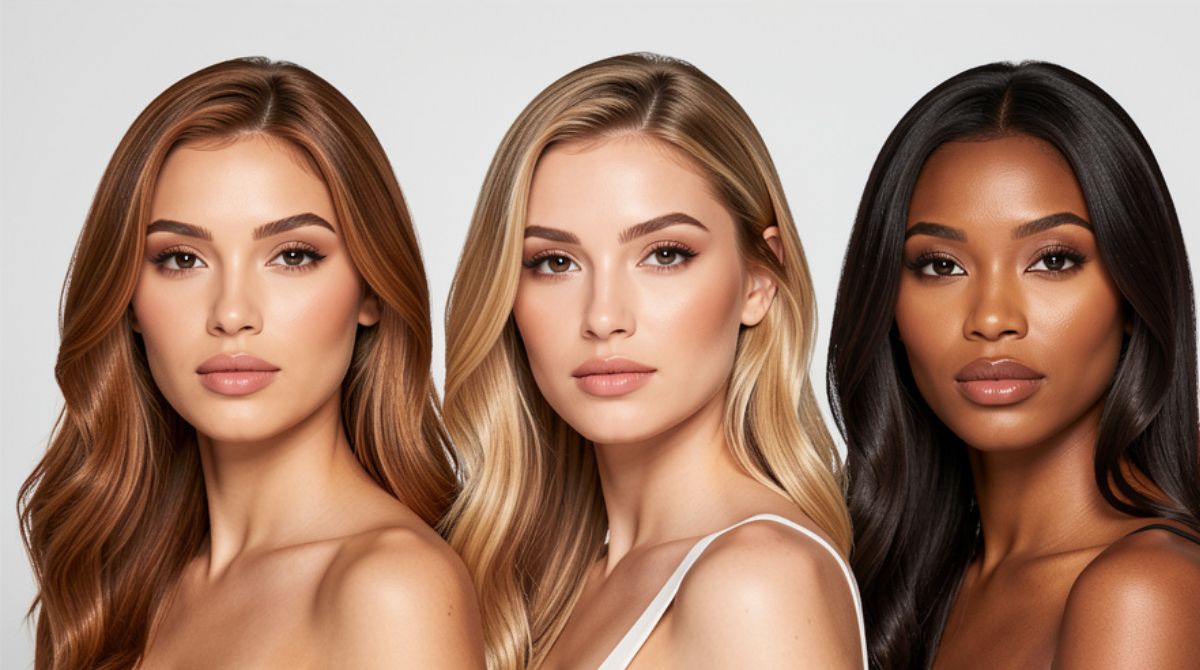
Choosing the right hair color starts with understanding what your skin naturally reflects. The goal is harmony between undertone, depth and contrast so your features look brighter and more balanced.
When the shade fits, complexion looks clearer, eyes stand out and makeup becomes simpler. When it clashes, skin can look dull, overly red or washed out even with a great haircut.
Why Skin Tone Matters When Choosing Hair Color?
Skin tone and undertone act like the backdrop for every hair shade. A color that is too warm or too cool against your undertone can magnify shadows and unevenness.
Depth matters as much as temperature. A shade that matches your undertone but is far too dark or too light can create harsh contrast and pull attention away from your eyes and brows.
How To Identify Your Skin Undertone?

Undertone is the subtle hue under the skin surface that stays consistent even when you tan. Most people fall into warm, cool or neutral, with olive often sitting in the neutral range with a green cast.
Use a few checks together instead of relying on one. Lighting and surface redness can mislead, so look at patterns that repeat.
- Vein test. Blue or purple leaning veins often suggest cool, green leaning veins often suggest warm and a mix can indicate neutral.
- Jewelry test. Gold tends to flatter warm undertones, silver tends to flatter cool undertones and both usually work on neutral.
- White fabric test. Bright white can make cool skin look crisp, while warm skin often looks better near cream or off white.
- Sun response. Skin that burns easily often leans cool, while skin that tans easily often leans warm, though this is not absolute.
Once undertone is clear, choose hair color temperature and depth with much more confidence.
Warm Vs Cool Vs Neutral Undertones Explained
Warm undertones carry golden, peach, or yellow notes, even when the surface looks pink. Cool undertones carry pink, red or bluish notes, even if the skin is not visibly rosy.
Neutral undertones sit between the two and usually tolerate both warm and cool shades. Olive skin tone is often neutral with a muted green cast, which affects how reds and very ashy shades read on the face.

| Undertone Group | Hair Color Direction That Flatters | Notes To Keep It Natural |
|---|---|---|
| Warm | Honey blonde, caramel, golden brown, copper, warm auburn | Choose golden reflect and avoid overly ashy tones that can look flat |
| Cool | Ash blonde, champagne, cool beige, mocha, cool espresso, burgundy | Keep brassiness controlled and avoid orange based copper if it turns skin ruddy |
| Neutral | Beige blonde, bronde, soft chestnut, neutral chocolate, balanced auburn | Stay near natural depth and tweak warm or cool by small increments |
| Olive Leaning Neutral | Bronde, mushroom brown, neutral dark brown, soft copper brown | Avoid very icy platinum and very blue black if they emphasize green tones |
Best Hair Colors For Warm Skin Tones
Warm undertones often look healthiest with golden reflect and sunlit dimension. The most flattering shades typically sit in warm blondes, warm browns and coppery reds.
- Honey blonde and golden blonde. Works well when you want brightness without looking pale.

- Caramel and toffee balayage. Adds softness around the face and keeps roots low maintenance.

- Warm chestnut and cinnamon brown. Enhances warmth while staying natural for many brunettes.

- Copper and warm auburn. Brings out golden tones and can make brown eyes look richer.

If you prefer darker hair, choose deep brown with warm reflect rather than flat black. A subtle golden glaze can keep the shade from looking heavy.
Best Hair Colors For Cool Skin Tones
Cool undertones typically shine with ash, beige and cooler brunette tones. These shades can make skin look clearer and reduce the look of redness.
- Ash blonde and champagne blonde. Keeps brightness while avoiding strong yellow that can clash.

- Cool beige and pearl gloss. Softens highlights and adds polish without turning icy

.
- Mocha and cool chocolate. Gives depth with a refined, neutral-cool reflect.

- Burgundy and wine toned red brown. Adds richness without pulling orange.

When lifting to blonde, ask for toner maintenance. Cool blondes need regular toning to stay balanced and prevent brassiness.
Best Hair Colors For Neutral Skin Tones
Neutral undertones are flexible, but the best results usually come from balance. Choose shades that sit between golden and ashy and lean warm or cool based on your eye color and wardrobe.
- Bronde and beige blonde. Offers natural looking dimension and easy grow out.
- Neutral chocolate and soft espresso. Keeps depth without going overly cool or overly warm.
- Balanced auburn. Looks natural when it has both copper and brown in the mix.
If you keep changing tones and nothing feels right, neutral is often the reason. Small shifts in reflect can make a big difference, so adjust gradually.
Hair Color For Fair Skin
Fair skin can look stunning with both light and dark hair, but contrast needs to feel intentional. Match undertone first, then choose depth based on how bold you want your look.
- Fair warm. Strawberry blonde, honey blonde and light golden brown often look seamless.
- Fair cool. Ash blonde, cool beige blonde and cool medium brown can look crisp and elegant.
- Fair neutral. Bronde and soft chestnut tend to be the most forgiving.
Ultra dark shades can emphasize under eye shadows on very fair skin. If you love deep color, add subtle dimension or a softer root to keep it wearable.
Hair Color For Medium Skin
Medium skin usually has enough depth to carry richer color and stronger highlights. The key is picking the right reflect so the face does not look sallow or overly red.
- Medium warm. Caramel ribbons, golden brown and copper brown add glow.
- Medium cool. Mocha, cool chestnut and ash bronde can look polished.
- Medium neutral. Balanced chocolate, beige highlights and soft auburn work well.
Medium skin often looks best with dimension rather than a single flat shade. This is where glazing and lowlights can elevate the finish.
Hair Color For Dark Skin
Dark skin can support deep, saturated shades and high contrast highlights when placed well. Undertone still matters, especially when choosing the reflect in browns, reds and blondes.
- Dark warm. Rich chocolate with golden reflect, warm mahogany and copper accents can look radiant.
- Dark cool. Cool espresso, blue red burgundy and ash brown highlights can look sleek.
- Dark neutral. Neutral dark brown, balanced caramel highlights and soft auburn brown are versatile.
If you go significantly lighter, prioritize healthy lift and a bond building routine. The most flattering color still needs shine and elasticity to look expensive.
Best Hair Color For Olive Skin Tone
Olive skin tone often reads neutral with a green or gray cast, so extremes can feel stark. Very yellow blonde can look brassy, while very icy tones can exaggerate the green cast.
Most olive complexions look great with bronde, mushroom brown, neutral chocolate and soft copper brown. A face framing highlight in beige or caramel can add brightness without turning orange.

Hair Color Based On Eye Color
Eye color influences how dramatic a shade looks and where you can push contrast. Use undertone as the main rule and eye color as the fine tuning tool.
- Blue and gray eyes. Cool blondes, cool browns and soft burgundy can make them look clearer.
- Green and hazel eyes. Copper, warm auburn and caramel dimension can intensify the green tones.
- Brown eyes. Almost any depth works, but reflect matters, with warm browns for warmth and mocha for cool balance.
If your eyes are light, avoid choosing a hair color that is too close to your skin depth. A little contrast helps eyes stand out without looking harsh.
Balayage Vs Highlights Vs Full Color
Your technique choice affects maintenance, softness and how undertone plays across the face. Dimensional techniques can correct small mismatches by blending multiple reflects.
- Balayage. Hand painted dimension with softer grow out and a natural gradient.
- Highlights. More uniform brightness that can be fine or bold depending on placement.
- Full color. Solid coverage that is ideal for gray coverage or major tone shifts.
If you are unsure about tone, balayage with a gloss is often the safest entry point. It allows adjustment through toners without locking you into a single all over reflect.
Hair Colors To Avoid For Your Skin Tone
Some shades are not wrong on their own, but they can fight your undertone or overpower your natural contrast. Avoiding these common clashes can save time and reduce damage from repeated corrections.
- Warm skin and icy ash. Can make skin look dull and emphasize yellow in a way that feels flat.
- Cool skin and orange copper. Can pull redness and make the complexion look flushed.
- Olive skin and extreme platinum. Can look stark and highlight green or gray tones in the skin.
- Very fair skin and jet black. Can create harsh contrast and emphasize shadows unless balanced with dimension.
If you love a shade that is on the avoid list, ask for a tweak in reflect rather than abandoning it. Small shifts in toner, root shadow or highlight warmth can make it wearable.
Common Hair Color Mistakes By Skin Tone
Most problems come from choosing color by photo inspiration rather than undertone and depth. Another issue is ignoring maintenance, since brassiness and fading change the tone quickly.
- Choosing level without considering contrast. Going too light or too dark can overwhelm your features even if the tone is correct.
- Ignoring eyebrow and lash depth. Hair that is much lighter than brows can look disconnected unless brows are softly adjusted.
- Skipping a gloss or toner plan. Many shades need a refresh to keep reflect consistent and prevent muddiness.
- Over correcting warmth. Pushing too far into ash can turn hair flat, especially on neutral and warm skin.
Fixing these mistakes usually requires less change than expected. The best corrections often involve adjusting reflect and adding dimension, not drastically changing level.
Conclusion
The right hair color comes from matching undertone, choosing a flattering depth and using technique to control contrast. Warm undertones tend to glow with golden and copper notes, cool undertones suit ash and wine tones and neutral undertones look best in balanced shades.
Use skin depth and eye color to refine your choice, then pick balayage, highlights or full color based on the maintenance you can commit to. When the tone and depth align, the result looks natural, bright and easy to wear.


