

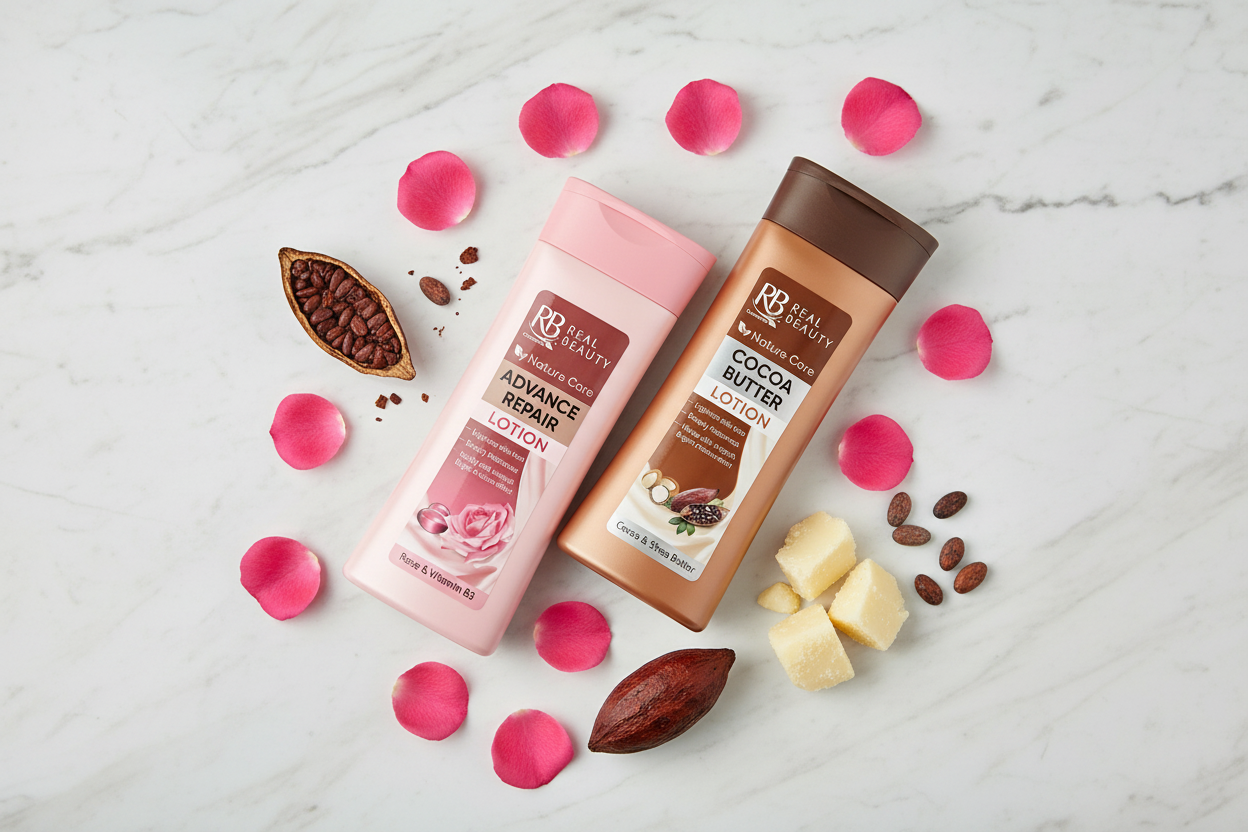
Daily moisturizing comes down to two popular choices, body lotion and body butter. Both aim to reduce dryness, smooth rough patches and support a healthy skin barrier.
The difference is mainly in water content, oil content and how they feel on the skin. Those factors also affect how well each one fits daily use across climates, seasons and skin types.
What Body Lotion Is Made Of?

Body lotion is a water-based emulsion that blends water, humectants and lightweight oils. It is designed to spread easily, absorb quickly and feel comfortable under clothing.
Most lotions include ingredients that draw water into the outer layer of skin and reduce water loss over time. This balance makes lotion a strong everyday option for normal to mildly dry skin.
Common Ingredients In Lotions
Ingredient lists vary, but many lotions share a similar structure. The supporting ingredients can change the finish, scent and tolerance for sensitive skin.
- Humectants: Glycerin, hyaluronic acid and panthenol help skin hold onto moisture.
- Emollients: Squalane, fatty alcohols and plant oils soften texture and reduce flakiness.
- Occlusives: Dimethicone or small amounts of petrolatum slow water loss without feeling heavy.
- Stabilizers: Emulsifiers and thickeners keep water and oils evenly blended.
This mix is why many lotions feel light while still helping skin stay comfortable through the day.
What Body Butter Is Made Of?

Body butter is typically richer and more oil-forward, often with little to no water. It relies on dense butters and heavier oils that melt with body heat and form a more protective layer.
That protective feel can be ideal for very dry skin, wind exposure, or areas that crack easily. It can also feel too heavy for some people in humid weather or under tight clothing.
Common Ingredients In Body Butters
Butters focus on barrier support and long wear time. They often use fewer water-soluble ingredients and more lipids that sit on the skin longer.
- Plant butters: Shea butter, cocoa butter, mango butter and kokum butter provide rich slip and cushion.
- Oils: Jojoba, avocado, almond, sunflower and olive oil help soften and improve flexibility.
- Waxes: Beeswax, candelilla wax, or synthetic waxes increase firmness and reduce melt-off.
- Support actives: Vitamin E, ceramides and soothing extracts may be added for comfort.
Because these formulas are more concentrated, a small amount can go a long way on damp skin.
Key Differences In Texture And Absorption

Texture is often the first thing you notice. Lotion feels fluid and fast-spreading, while body butter feels thicker and can require more massaging to distribute evenly.
Absorption differs too. Lotion tends to sink in quickly, while butter may leave a soft film that continues to condition skin over several hours.
| Feature | Body Lotion | Body Butter |
|---|---|---|
| Water Content | Higher water-based formula | Lower water content or anhydrous |
| Texture And Feel | Lightweight, spreadable | Thick, dense, cushiony |
| Absorption Speed | Fast to medium | Medium to slow |
| Best For | Normal to mildly dry skin | Very dry skin and rough areas |
The right feel matters because daily use is easier when the product fits your routine, wardrobe and comfort level.
Which Is Better For Daily Use
For many people, body lotion is the easiest daily moisturizer because it absorbs quickly and layers well. It works well after a morning shower, before getting dressed and throughout warmer months.
Body butter can still be a daily choice, especially when skin is persistently dry or when you want long-lasting softness. It often performs best at night or on targeted areas such as elbows, knees, hands and heels.
Daily Use Guidelines By Skin Type
Skin type and environment should drive the choice more than trends. The goal is consistent hydration without greasiness or irritation.
- Normal skin: A lightweight lotion maintains softness without buildup.
- Dry skin: A richer lotion in the morning and body butter at night can help reduce tightness.
- Very dry or flaky skin: Body butter after bathing helps lock in moisture longer.
- Oily or acne-prone body skin: A non-comedogenic lotion and careful application can feel better than heavy butters.
- Sensitive skin: Fragrance-free formulas with simple ingredient lists are usually easier to tolerate.
Once you match texture to your needs, the rest is about timing and consistent application.
How To Apply For Better Results?

Application technique changes the outcome more than most people expect. Moisturizers work best when they trap existing water in the skin rather than trying to hydrate skin that is already fully dry.
If you only change one habit, apply within a few minutes after bathing while skin is still slightly damp. That small window can improve softness and reduce the amount needed.
- Start With Damp Skin. Pat dry gently, then apply while skin still feels lightly moist.
- Warm The Product. Rub a small amount between palms to reduce tugging and help it spread evenly.
- Work In Sections. Apply legs, arms, torso, then hands and feet to avoid missing dry spots.
- Focus On Rough Areas. Add a second thin layer to elbows, knees and heels if they feel tight.
- Let It Set. Give it a few minutes before dressing, especially with body butter.
Good application prevents greasy residue and makes both lotion and butter feel more effective.
Ingredients To Look For And Avoid
Ingredient quality matters, but so does compatibility with your skin. Two products can both be labeled moisturizing and still behave very differently due to fragrance, preservatives and the type of oils used.
When comparing body lotion vs body butter, focus on ingredients that support the skin barrier and reduce irritation risk. Patch testing new products can help if you react easily.
Helpful Ingredients For Hydration And Barrier Support
Some ingredients improve daily comfort and reduce roughness with regular use. They are found in both lotions and butters, depending on the formula style.
- Ceramides: Support barrier lipids and help reduce dryness over time.
- Glycerin: A reliable humectant that improves hydration and softness.
- Urea: Helps with rough, thick, or scaly skin when used at appropriate strengths.
- Lactic acid: Gently smooths texture while supporting hydration in well-balanced formulas.
- Colloidal oatmeal: Calms discomfort and supports sensitive, itchy skin.
These options work best when the base formula feels comfortable enough for consistent use.
Potential Irritants For Some Skin Types
Not everyone needs to avoid these ingredients, but they can be common triggers. The more reactive your skin, the more important it is to keep formulas simple.
- Strong fragrance: Can cause stinging or redness, especially on freshly shaved or compromised skin.
- Essential oils: Some are sensitizing and may lead to irritation with repeated exposure.
- High alcohol content: Certain alcohols can be drying when used in large amounts.
- Heavy occlusives on breakouts: Very rich products may feel congesting on acne-prone areas.
Choosing a well-tolerated formula makes daily application realistic, which is what drives results.
Seasonal And Lifestyle Considerations
Climate and routine often decide what feels best. Hot, humid environments usually pair well with lightweight lotions, while cold, dry air often calls for heavier butters or layered moisturization.
Frequent handwashing, swimming and long hot showers also increase dryness. In those cases, richer products or a lotion plus targeted butter on rough areas can prevent cracking.
Layering Lotion And Butter Without Feeling Greasy
Using both is not overkill when it is done strategically. Lotion can provide water-based hydration and butter can seal it in on areas that lose moisture quickly.
Apply lotion first on damp skin, wait briefly, then press a small amount of body butter onto the driest spots. Keeping layers thin prevents slippery residue and improves comfort under clothing.
Conclusion
Body lotion and body butter both moisturize, but they do it in different ways. Lotion is lighter, faster to absorb and easier for daily all-over use, while body butter is richer and better for very dry skin and stubborn rough patches.
If daily comfort is the goal, choose the texture you will use consistently and adjust with the season. Many routines work best with lotion for most areas and body butter as a targeted seal on the driest zones.


