

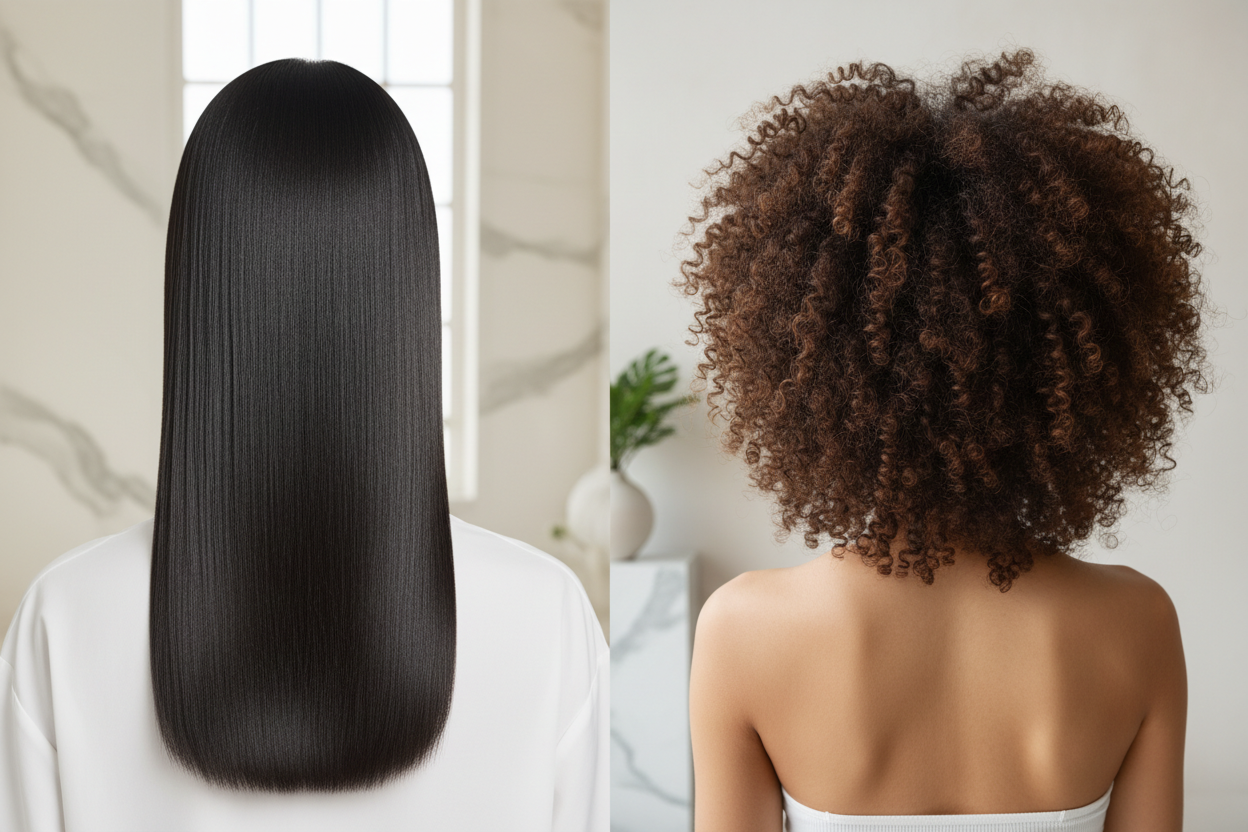
Choosing between a keratin treatment and a protein treatment can change how your hair looks, feels and behaves day to day. One mainly smooths and reduces frizz, while the other rebuilds weak areas and improves strength.
The best choice depends on your hair’s current condition, not just your curl pattern or how dry it feels. When you match the treatment to what your hair is missing, results look better and last longer.
Keratin Vs Protein Treatment Quick Comparison

Keratin treatments focus on smoothing the hair surface and helping it stay sleek in humidity. Protein treatments focus on reinforcing the hair structure so strands resist breakage and hold shape.
Both can make hair feel softer, but for different reasons. Keratin typically improves slip and shine, while protein improves resilience and reduces snap.
| Category | Keratin Treatment | Protein Treatment |
|---|---|---|
| Main Goal | Smoother cuticle and frizz control | Stronger strands and less breakage |
| Best For | Coarse, frizzy, humidity-prone hair | Overprocessed, fragile, stretchy hair |
| How It Feels | Silky, sleek, easier to detangle | Firmer, more structured, less limp |
| Common Risk When Overused | Flatness, buildup, faster greasing | Stiffness, dryness, increased tangles |
| Typical Longevity | Several weeks depending on wash routine | From one wash to several weeks depending on formula |
Once you know which direction you need, it becomes easier to pick a formula and schedule that supports your hair instead of stressing it.
What Is A Keratin Treatment?

A keratin treatment is a smoothing service or at-home system that helps the cuticle lie flatter. Many formulas use heat to set a coating or bonding effect that reduces frizz and improves shine.
Keratin is a protein your hair already contains, but treatments do not simply replace what is missing. They mainly improve surface behavior, which is why hair can look glossier and feel easier to blow dry.
Some salon smoothing treatments are called keratin even when they rely on other conditioning agents and crosslinking ingredients. If you are sensitive to fumes or scalp irritation, ask your stylist what the formula contains and how it is set.
What Is A Protein Treatment?

A protein treatment adds hydrolyzed proteins or amino acids that can temporarily fill in weak spots and reinforce the strand. This can improve strength, reduce breakage and help hair hold curl or style better.
Protein treatments vary widely in intensity. Light protein conditioners support daily maintenance, while stronger reconstructor masks are used less often and are more likely to cause stiffness if overdone.
Protein does not replace moisture and strong protein without adequate conditioning can feel rough. The most hair-friendly approach is protein plus balanced emollients and humectants in the routine.
Key Differences Keratin Vs Protein
Keratin treatments primarily target frizz control and manageability by smoothing the outside of the hair. Protein treatments primarily target damage and weakness by improving how the strand withstands stress.
Think of keratin as a surface performance upgrade and protein as a structural support tool. Both can be valuable, but the wrong one at the wrong time can make hair feel worse.
How They Change Hair Texture?
Keratin smoothing often makes hair look straighter or more relaxed, especially when paired with blow drying and flat ironing. Natural waves and curls can loosen depending on the formula and heat technique.
Protein generally does not straighten hair, but it can make curls clump better and feel springier when hair was previously too soft or overconditioned. When protein is excessive, curls can turn brittle and lose definition.
How They Interact With Chemical And Heat Damage?
Hair that has been bleached, highlighted, or relaxed often benefits from targeted protein because the internal structure is more compromised. Keratin can still help with smoothness, but it may mask damage rather than improve strength.
Frequent hot tools can make hair porous and frizzy, which can respond well to keratin-style smoothing. At the same time, heat damage can increase breakage, so a gentle protein strategy may also be needed.
How Long Results Tend To Last?
Keratin smoothing results usually fade gradually with washing, heat styling and clarifying shampoos. Longevity depends on product choice, aftercare and how often hair is exposed to saltwater or chlorine.
Protein results can be immediate but shorter-lived, especially with rinse-out treatments. Stronger reconstructors can have a more noticeable effect over multiple washes, but timing still matters.
Which One Is Best For Your Hair Type?
Your hair type includes texture, porosity, density and your history of coloring and heat. The right pick is the one that corrects your most limiting problem first.
If you are torn between the two, choose based on symptoms rather than labels like straight, wavy, or curly. Symptoms are more reliable than categories.
Best Matches For Keratin Treatments

Keratin smoothing is often a better fit when frizz and puffiness are the main issues and your hair is not snapping easily. It can also help when humidity ruins your blowout quickly.
- Coarse or thick strands. Smoothing can reduce bulk and improve slip so detangling takes less effort.
- High porosity hair with frizz. A flatter cuticle can make hair look shinier and feel less rough.
- Hair that holds onto moisture but looks puffy. Keratin-style smoothing can improve shape without needing heavier oils.
- Blow-dry focused routines. Many people notice faster drying time and a sleeker finish with less heat.
These benefits are strongest when the hair is reasonably strong and not already at a breaking point.
Best Matches For Protein Treatments
Protein is usually the better fit when hair feels weak, gummy, overly stretchy, or breaks during brushing. It is also useful when hair feels too soft and will not hold a curl or style.
- Bleached or color-treated hair. Protein can reduce breakage and improve the strand’s ability to handle washing and styling.
- Fine hair that gets limp. Light protein can add body and reduce the overconditioned feeling.
- Heat-stressed ends. Targeted protein on mid-lengths and ends can reduce snapping while you trim and recover.
- Curly hair losing definition. The right protein level can improve curl formation and reduce frizz from weak spots.
Pair protein with enough conditioning so hair stays flexible, not hard.
How To Tell What Your Hair Needs?

Hair can feel dry when it is actually damaged and it can feel soft when it is actually weak. A quick assessment based on behavior gives a clearer answer than guessing.
Check your hair on a normal wash day, not right after heavy oils or a fresh salon service. Product buildup can disguise what the strand is doing.
Signs You May Need Keratin Style Smoothing
Hair that is strong but unruly often wants smoothing more than rebuilding. The key clue is frizz that returns quickly even when hair is well-conditioned.
- Persistent surface frizz. Flyaways and puffiness show up soon after drying, especially in humidity.
- Rough feel mainly on the outside. The strand feels coarse even when it is not breaking much.
- Long styling time. Blow drying takes forever and the result does not last.
If breakage is minimal and the problem is mostly appearance and manageability, smoothing is often the more satisfying change.
Signs You May Need Protein Support
Weak hair has a different set of symptoms. It tends to stretch, snap, or fray no matter how gentle you are.
- Stretchy wet hair. Strands feel elastic and do not bounce back, especially after lightening or frequent heat.
- Breakage with detangling. Small broken pieces show up in the sink or on your brush.
- Mushy or overly soft feel. Hair feels limp and will not hold curl or volume.
When these signs are present, start with protein and reduce friction in your routine.
Can You Use Keratin And Protein Together?
Using keratin and protein together can work, but only when you control intensity and timing. Too much strengthening plus too much smoothing can create stiffness, buildup, or a coated feel.
A practical approach is to choose one priority and support it with a lighter version of the other. This keeps hair balanced between strength, flexibility and softness.
How To Combine Them Without Overdoing It?
Spacing treatments and using gentler formulas helps you avoid the common cycle of stiff hair followed by heavy conditioning. Pay attention to how hair responds after two or three washes, not only day one.
- Start With Your Main Problem. Pick protein first for breakage and elasticity issues, or keratin smoothing first for frizz and manageability issues.
- Wait And Reassess. Give your hair a few washes to settle, then check for stiffness, flatness, or renewed frizz.
- Add A Low-Intensity Companion. Use a light protein conditioner with a smoothing routine, or a light smoothing mask with a protein-focused repair plan.
- Keep Clarifying In Rotation. Occasional clarifying removes coating that can make hair feel dull and helps treatments perform more predictably.
When hair is balanced, it feels strong but still bends easily and looks smooth without heavy oils.
Aftercare Tips For Better Results
Aftercare determines whether a treatment looks great for weeks or fades fast. It also protects your scalp and lengths from irritation, dryness and excess buildup.
Small routine changes often matter more than buying a long list of products. Consistency is what keeps the cuticle calm and the strand supported.
- Use gentle cleansing most wash days. A mild shampoo helps preserve smoothness while still keeping the scalp clean.
- Condition with intention. Apply richer conditioner to mid-lengths and ends and keep the scalp lighter to avoid limp roots.
- Limit high heat. Use the lowest effective temperature and a heat protectant to reduce new damage.
- Reduce friction. A microfiber towel and careful detangling can prevent the breakage that makes hair look frizzy again.
- Protect from chlorine and salt. Rinse promptly and condition after exposure to keep hair from drying out.
These habits support both keratin-style smoothing and protein-based strengthening without forcing your hair into extremes.
Common Mistakes To Avoid
Most disappointing results come from using a treatment that does not match the problem or repeating it too often. Hair responds best to gradual adjustments and careful observation.
Avoid these common errors to protect your results and prevent new damage.
- Using protein when hair is already stiff. If hair feels hard, tangly, or straw-like, add moisture and reduce protein for a while.
- Using keratin smoothing on very fragile hair. If hair breaks easily, prioritize strength and gentle handling first.
- Skipping clarifying entirely. Buildup can make hair dull, heavy and harder to style, even when the treatment was applied correctly.
- Expecting one treatment to fix everything. Smoothness and strength are different goals and hair often needs a balanced routine.
- Ignoring the ends. Mid-lengths and ends usually need the most support, especially if you color or heat style regularly.
When you choose the right direction and keep your routine balanced, both options can deliver healthy-looking hair that is easier to manage and style.


