

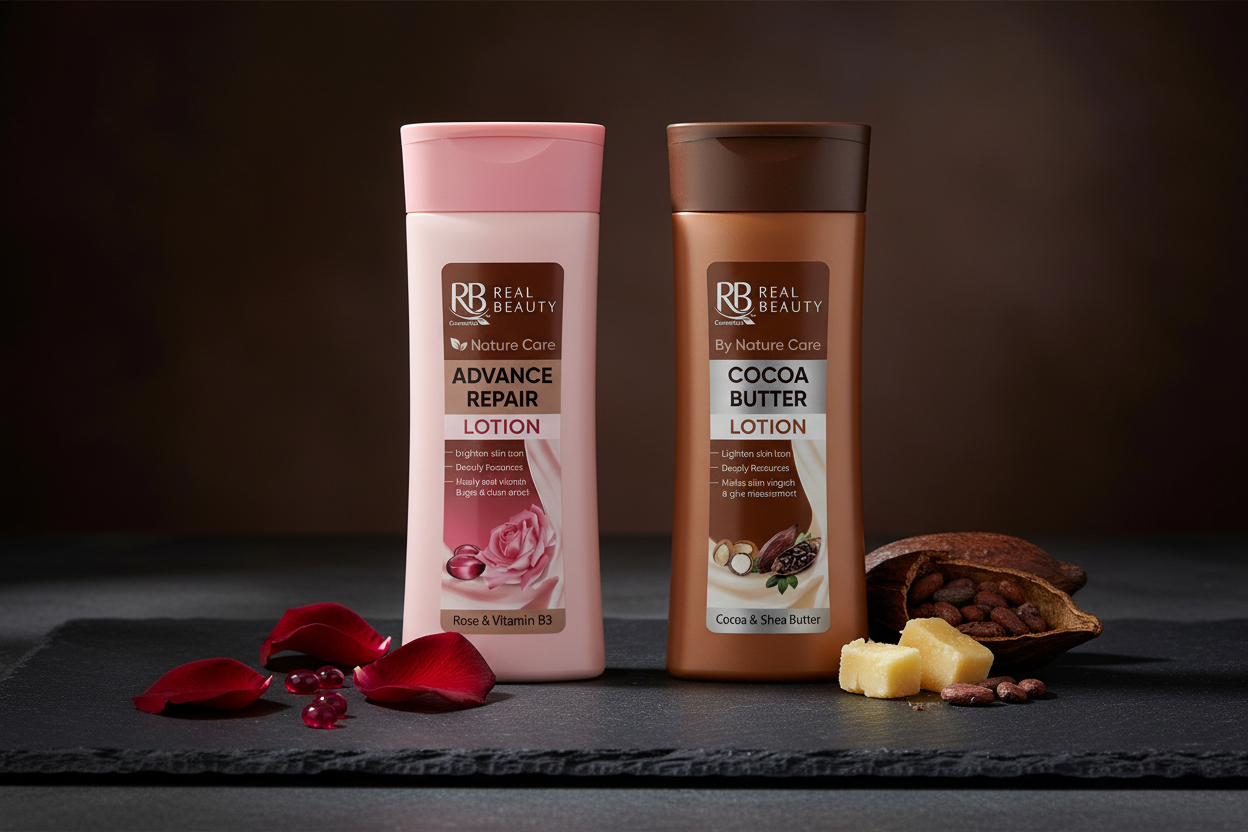
Dry skin is more than a rough texture. It often involves a weakened skin barrier that loses water faster than it can hold it.
A good body lotion should add moisture, reduce water loss and support barrier repair. The best choice depends on whether your main issue is tightness, flaking, sensitivity, or persistent rough patches.
What Advance Repair Lotion Usually Focuses On?

Advance repair style lotions are designed for very dry skin and roughness. They tend to target long-lasting hydration rather than only a soft feel right after application.
Many formulas in this category combine humectants, emollients and occlusives. That blend pulls water into the skin, smooths the surface and slows down moisture loss.
Common Ingredients In Advance Repair Formulas

Ingredient lists vary, but advance repair lotions often include well-studied barrier helpers. These are chosen to improve hydration and skin comfort over time.
- Humectants: glycerin and hyaluronic acid to attract water into the outer skin layers.
- Barrier lipids: ceramides and cholesterol in some formulas to support the skin barrier.
- Occlusives: petrolatum or dimethicone to reduce transepidermal water loss.
- Soothers: colloidal oatmeal, allantoin, or panthenol in some blends to calm irritation.
This mix usually suits people who need dependable hydration across the day, especially in low humidity or frequent handwashing routines.
What Cocoa Butter Lotion Usually Focuses On?
Cocoa butter lotions are known for richness and slip. They are popular when skin feels dry, looks dull, or needs a smoother finish after bathing.
The star ingredient is cocoa butter, a plant fat that works mainly as an emollient and occlusive. It helps soften skin and reduce the feeling of tightness by sealing in moisture.
Common Ingredients In Cocoa Butter Lotions

Cocoa butter lotions often include supportive oils and conditioning agents. Many also contain fragrance, which can be a deciding factor for sensitive skin.
- Cocoa butter: rich fatty acids that improve softness and flexibility.
- Plant oils: coconut oil, shea butter, or sunflower oil for added emollience.
- Humectants: glycerin or propylene glycol in many formulas for added hydration.
- Texture agents: fatty alcohols that thicken and improve spread without drying.
This category often excels at immediate comfort and a smooth, conditioned feel, especially for normal to dry skin.
Advance Repair Lotion Vs Cocoa Butter Lotion Key Differences
Both can help dry skin, but they tend to solve different problems. Advance repair lotions usually prioritize barrier support and long wear, while cocoa butter lotions often emphasize softness and richness.
The texture can also differ. Advance repair products are often creamy but less greasy, while cocoa butter lotions can feel heavier and more coating depending on the formula.
| Comparison Point | Advance Repair Lotion | Cocoa Butter Lotion |
|---|---|---|
| Best For | Very dry, rough, or flaky skin | Dry skin needing softness and comfort |
| Typical Feel | Hydrating, often non-greasy, absorbs steadily | Richer, more occlusive, can feel heavier |
| Barrier Support | Often includes ceramides or barrier helpers | Primarily seals moisture with plant butters |
| Daytime Wear | Good under clothing and frequent reapplication | Great for evening use or after shower |
Use the table as a quick filter, then match the choice to how your skin behaves across the day.
Which One Is Better For Very Dry And Flaky Skin?
For very dry skin with visible flaking, an advance repair lotion is often the stronger option. The reason is simple, these formulas tend to combine humectants with occlusives in a balanced way that keeps hydration steady.
If your dryness comes with rough texture on elbows, shins, or knees, look for ingredients that support barrier repair. Ceramides, glycerin and dimethicone are commonly helpful for that pattern of dryness.
Which One Is Better For Dullness And Tightness After Showering?
If your skin feels tight after bathing but improves quickly with a rich moisturizer, cocoa butter lotion can be a great match. Cocoa butter helps reduce that uncomfortable tight sensation by sealing in water while skin is still slightly damp.
This approach works best when you apply within a few minutes of towel drying. That timing helps trap the water already in the skin, which boosts the softening effect.
Sensitivity And Fragrance Considerations
Dry skin often overlaps with sensitive skin, especially when the barrier is compromised. In that case, fragrance can be a dealbreaker even if the lotion feels luxurious.
Many advance repair lotions are available in fragrance-free versions, which can reduce the risk of stinging on cracked or freshly shaved skin. Cocoa butter lotions more commonly include scent, so check labels if you react easily.
Texture And Finish Greasy Vs Lightweight
The best lotion is the one you will use consistently. Texture matters because it affects daily habits, especially on busy mornings or under tighter clothing.
If you dislike residue on hands, choose a formula that absorbs cleanly and leaves a satin finish. If you prefer a protective coating at night, a richer cocoa butter lotion can feel more comforting and help you wake up with softer skin.
How To Choose The Right Lotion For Your Skin Type?
Choosing between these two comes down to your dryness level, tolerance for fragrance and the feel you want. It also depends on where you are applying it, since hands and shins often need more support than arms or torso.
Use these quick checkpoints to narrow it down without overthinking the label.
- Pick advance repair lotion if: your skin is very dry, rough, or flaky and you want lasting hydration.
- Pick cocoa butter lotion if: your main goal is softness, comfort and a richer finish after bathing.
- Lean fragrance-free if: you sting easily, have eczema-prone areas, or react to scented products.
- Match thickness to body area if: elbows, knees, feet and hands need more occlusion than other areas.
Once you pick a direction, the next step is applying it in a way that actually changes your skin.
How To Apply For Better Results?
Even a great lotion can underperform if it is applied at the wrong time or too lightly. Consistency and timing often matter more than switching products repeatedly.
- Apply on slightly damp skin. Pat dry after bathing and moisturize while skin still holds water.
- Use enough product. Cover the area with a thin, even layer rather than spot-applying to only the driest patches.
- Reapply where friction is high. Hands, elbows and shins often need another layer during the day.
- Seal extra-dry spots at night. Add a second coat to rough areas before bed for better overnight comfort.
After a week of steady use, skin often feels less tight and looks smoother, especially when the barrier is protected daily.
Conclusion
Advance repair lotion is usually better for very dry skin that needs long-lasting hydration and barrier support. Cocoa butter lotion is often better for people who want a richer, softer feel and immediate comfort after showering.
If dryness is persistent, prioritize fragrance-free options, apply on damp skin and stay consistent. The right choice is the one your skin tolerates well and that you will use every day.


