

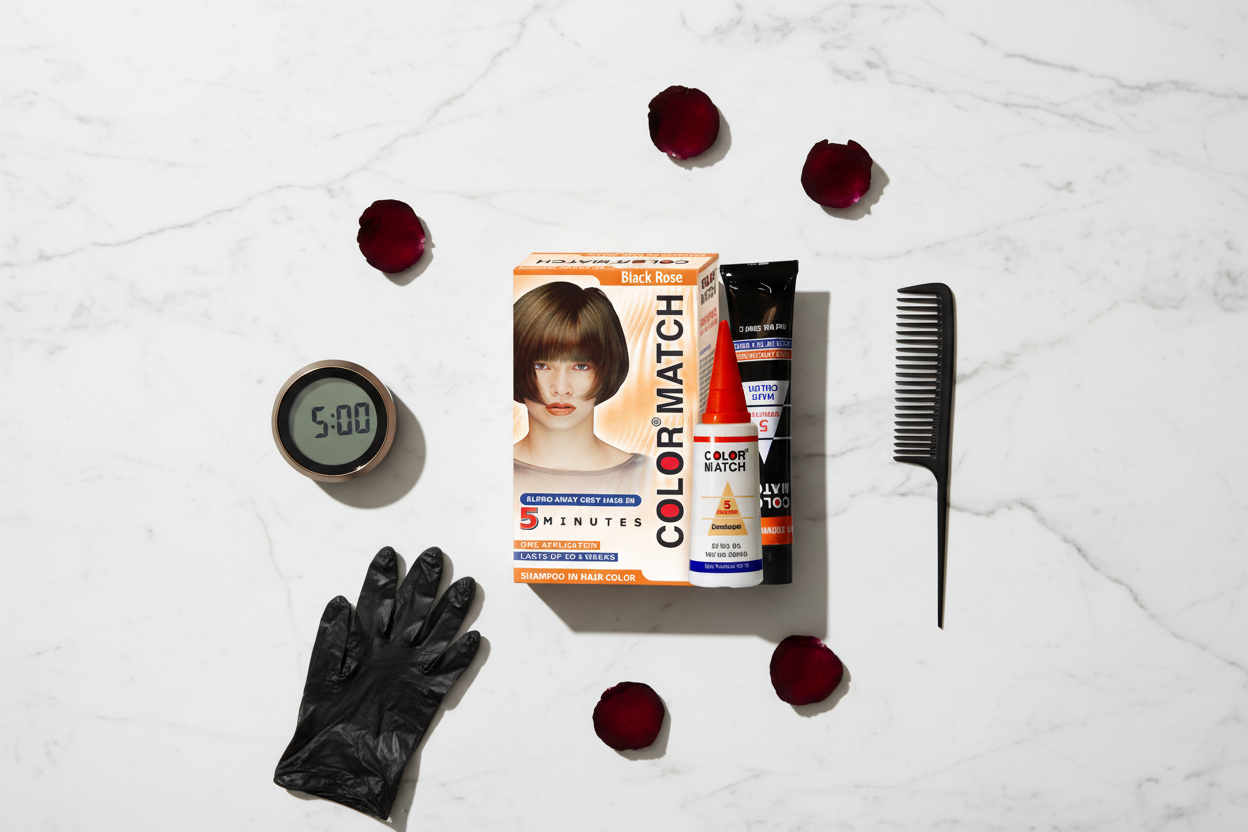
Five-minute hair color promises fast coverage and a quick refresh with minimal downtime. That speed can be a real advantage, but it also means the formula and method are not ideal for every hair type, goal, or scalp condition.
This guide breaks down who should use five-minute hair color, who should avoid it, and how to choose and apply it with fewer surprises. It focuses on realistic outcomes, hair health, and safer decision-making.
What Five Minute Hair Color Really Is?

Five-minute hair color is typically a rapid-developing dye designed to deposit color quickly, often targeting gray blending or root touch-ups. Many options are permanent or demi-permanent, but they rely on stronger developers or faster-acting dye intermediates to work in less time.
Because processing is short, the result often favors speed over nuance. It tends to be best for subtle darkening, gray softening, and quick root camouflage rather than major shade changes.
How The Formula Works On Different Hair Types?
Hair porosity, thickness, previous color, and the amount of gray all change how fast pigment deposits. Highly porous hair can grab color quickly and go darker than expected in a five-minute window.
Resistant gray, low porosity hair, and coarse strands often need more time for full saturation. When processing time is fixed, application technique becomes the main lever that controls outcome.
Who Should Use Five Minute Hair Color?
Five-minute hair color fits people who want a practical refresh without a full dye session. It works best when expectations are aligned with what quick processing can deliver.
- Busy schedules: Useful when a longer processing time is a deal-breaker and a small improvement is enough.
- Early grays: Helps blend scattered grays and soften contrast instead of aiming for perfect full coverage.
- Root touch-ups: Best for covering or blending new growth that is close to the existing shade.
- Darkening goals: More predictable when you are staying at the same level or going slightly darker.
- Short haircuts: Easier to apply quickly and evenly, which improves the chances of uniform results.
These profiles share one theme. The goal is targeted improvement, not a dramatic transformation.
Who Should Avoid Five Minute Hair Color?

Some situations raise the risk of uneven color, irritation, or disappointment. When hair is compromised or the goal is complex, more controlled timing and professional formulation are safer.
- Sensitive scalp or eczema history: Fast-acting dyes can still irritate, especially if you have had reactions before.
- High percentage of resistant gray: Quick processing often leaves stubborn areas lighter or patchy.
- Previously lightened hair: Porous ends can over-deposit and create dark bands or muddy tone.
- Major shade changes: Lifting several levels or shifting undertones usually needs longer timing and careful control.
- Very long or thick hair: Five minutes is rarely enough to apply and saturate before the first sections finish.
If any of these apply, a standard processing color, a demi-permanent gloss, or a salon consultation is often the better route.
Choosing The Right Shade For Fast Processing
Shade choice matters more with five-minute color because there is less time to correct mid-process. Staying close to your current level reduces the risk of harsh lines and unexpected darkness.
If you are between two shades, choosing the slightly lighter option is often safer, especially on porous hair. Neutral or cool tones can reduce orange warmth, but overly ashy shades may look flat if your hair naturally reads warm.
What To Check On The Box And Ingredient List?
Packaging language can be confusing, so focus on how the product behaves rather than marketing terms. Look for whether it is permanent or demi-permanent, the intended use area, and whether it targets gray blending or full coverage.
- Permanent versus demi-permanent: Permanent tends to hold longer but can be harsher and more difficult to correct.
- Developer strength: Higher developer can increase speed and coverage but may raise dryness and irritation risk.
- Ammonia or ethanolamine: These can improve penetration but may be more drying for some people.
- Fragrance and sensitizers: Added fragrance can trigger scalp irritation even when dye does not.
When you know your scalp reacts, prioritize simpler formulas and treat patch testing as non-negotiable.
Five Minute Hair Color Versus Traditional Dye
The biggest difference is control. Traditional dye gives more time for careful sectioning and allows the formula to work more evenly across resistant and porous areas.
Five-minute color trades some of that evenness for convenience. It can still look polished when used as a targeted touch-up, especially on short hair or minimal gray.
| Factor | Five Minute Hair Color | Traditional Processing Color |
|---|---|---|
| Best Use | Quick root touch-up and gray blending | Full coverage and larger shade changes |
| Timing Flexibility | Low, results depend on fast application | Higher, more time for saturation and correction |
| Risk Of Uneven Color | Higher on long, thick, or porous hair | Lower with good sectioning and processing |
| Hair Feel After Coloring | Can feel drier if used often | Varies, but can be gentler with correct formula |
How To Apply It For More Even Results?

Five minutes goes fast, so set up first. Have gloves on, hair clipped into sections, and a timer ready before you mix color.
- Start with dry, detangled hair. Product spreads more evenly and you can see where you have applied.
- Section for control. Divide hair into manageable zones so you do not miss roots or overload ends.
- Apply to the most resistant areas first. Temples and hairline often need the most attention for gray coverage.
- Use a light hand on porous ends. If you are only touching up roots, keep color off mid-lengths and ends.
- Time precisely. Start the timer when application begins and rinse promptly at the end.
After rinsing, use a gentle shampoo and conditioner. If the kit includes an after-color treatment, use it and leave it on for the full time suggested.
Common Mistakes That Cause Patchiness
Patchiness is usually an application problem, not a product defect. With rapid color, small mistakes become visible because there is no time buffer.
- Rushing without sectioning: Creates skipped roots and uneven saturation.
- Dragging color through the ends: Causes dark, dull lengths and a root-to-end mismatch.
- Overlapping repeatedly: Builds pigment and can create bands, especially on previously colored hair.
- Using on product buildup: Heavy oils and styling residue can block even deposit.
A clean canvas and a targeted approach usually improve results more than switching brands.
Scalp Safety And Patch Testing
Fast color still contains dye molecules that can trigger allergic reactions. A patch test before each new product, and after long breaks, is the safest approach.
Avoid coloring on broken skin, active irritation, or immediately after harsh exfoliation. If you feel burning during processing, rinse immediately and stop using the product.
How Often You Can Use It Without Damaging Hair?

Frequent root touch-ups can be fine when kept strictly on new growth. Problems start when color repeatedly overlaps onto mid-lengths, which can increase dryness and dullness over time.
Spacing applications as much as your look allows helps maintain hair integrity. Supporting hair with conditioning masks, gentle cleansing, and heat protection can also reduce breakage risk.
Conclusion
Five-minute hair color is best for quick root touch-ups, subtle gray blending, and small tone refreshes when you want speed and simplicity. It is less suitable for high-resistant gray, previously lightened hair, major shade changes, and anyone with a reactive scalp.
Choose a close-to-natural shade, prioritize sectioning, and time precisely to avoid patchiness. When your hair history is complex or your scalp is sensitive, a slower, more controlled coloring option is usually the smarter choice.


