

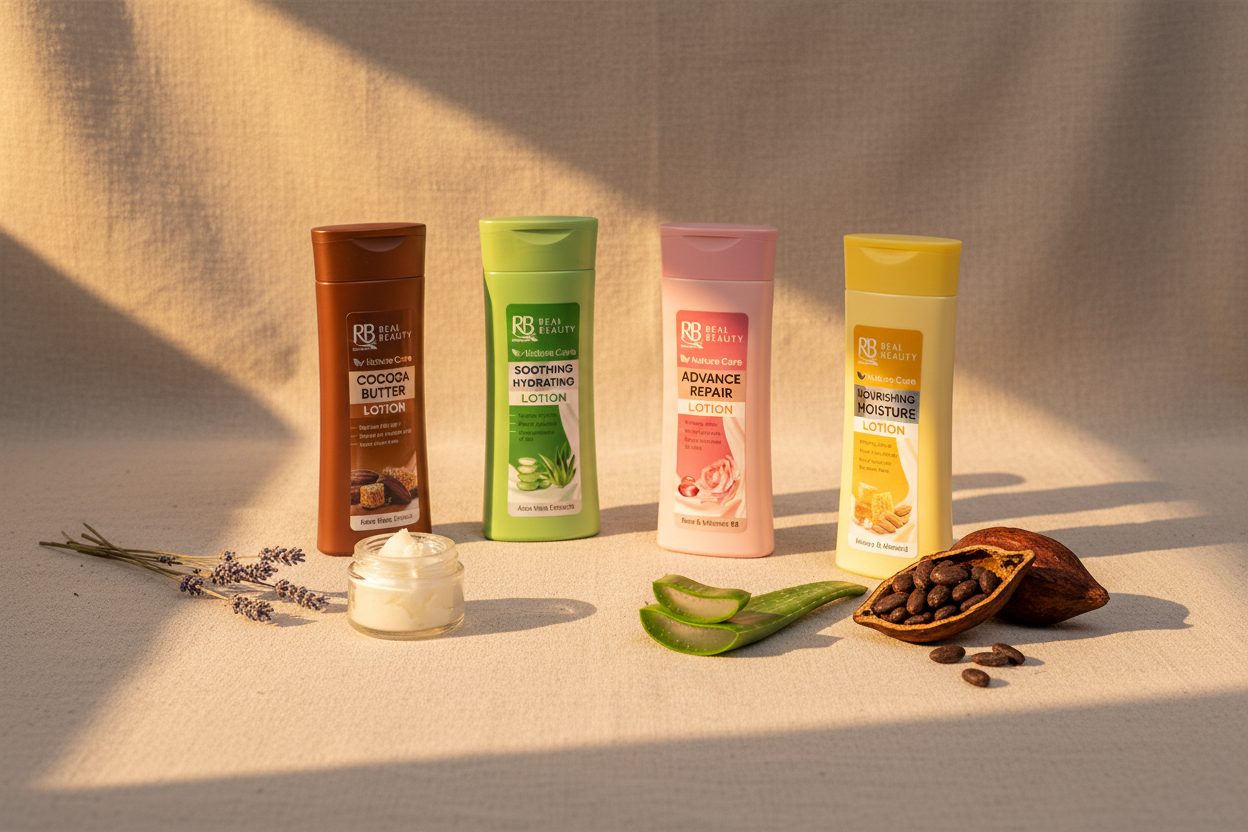
Dry skin rarely stays the same all year. Temperature, humidity, wind, indoor heating and even frequent handwashing can shift how your body skin feels from week to week.

This guide breaks down the best body lotions for dry skin for every season, with practical ingredient guidance and simple routines that support a healthy skin barrier.
Why Dry Skin Changes With The Seasons?
Your skin barrier relies on lipids, natural moisturizing factors and a steady water balance. When the environment gets harsh, that barrier loses water faster and becomes more reactive.
Cold air and indoor heat pull moisture from skin, while summer sweat and sunscreen layering can trigger clogged pores or irritation. Seasonal care works best when you match texture and ingredients to the weather.
What To Look For In The Best Body Lotions For Dry Skin?
Body lotions for dry skin work when they do three jobs. They add water, hold it in place and reinforce the barrier so it leaks less.
Ingredient labels can feel noisy, so focus on categories that directly affect dryness and comfort.
- Humectants: Glycerin, hyaluronic acid, urea and panthenol bind water and soften rough patches.
- Emollients: Squalane, shea butter, fatty alcohols and ceramides fill gaps between skin cells and reduce tightness.
- Occlusives: Petrolatum, dimethicone and waxes slow water loss and protect compromised areas.
- Soothing supports: Colloidal oatmeal, allantoin and niacinamide help calm itch and sensitivity.
- Fragrance choices: Fragrance-free options reduce the odds of stinging when skin is cracked or inflamed.
Once you know what each group does, choosing a seasonal formula becomes much easier.
Texture Matters Lotion Cream Butter And Balm

Consistency affects how a product behaves on skin. A light lotion can feel perfect in humid weather, while a thick cream is often needed when the air is dry.
Use texture as your first filter, then fine-tune by ingredients.
- Lotion: Light, fast-absorbing and good for mild dryness or sticky climates.
- Cream: Medium weight with stronger barrier support for daily dry skin.
- Body butter: Rich, oil-forward feel for rough elbows, knees and legs.
- Balm or ointment: Very occlusive for cracked areas, overnight repair and extreme dryness.
Many people keep two textures on hand and rotate based on how skin feels after showering.
Seasonal Picks For Dry Skin
The best body lotions for dry skin for every season usually come down to balancing hydration with comfort. A year-round staple can work, but small shifts often prevent flare-ups.
These seasonal profiles can guide your choices without locking you into a single product.
Winter Body Lotions For Deep Dryness
Winter dryness needs more occlusion and more lipid support. Look for creams with ceramides and glycerin, then add petrolatum-based protection on the worst spots.

If skin cracks or itches, choose fragrance-free formulas and prioritize colloidal oatmeal, niacinamide, or panthenol for comfort.
- Best texture: Cream or balm
- Best ingredients: Ceramides, shea butter, petrolatum, dimethicone, colloidal oatmeal
- Where to apply extra: Shins, hands, elbows, feet
When the air is very dry, an ointment layer at night can make a visible difference by morning.
Spring Body Lotions For Barrier Reset
Spring can bring fluctuating temperatures and higher pollen exposure, which can make skin feel both dry and sensitive. A medium-weight cream often hits the sweet spot.
Choose formulas with barrier lipids and gentle hydrators and keep exfoliation conservative so you do not strip recovering skin.
- Best texture: Lotion-cream hybrid
- Best ingredients: Ceramides, glycerin, squalane, niacinamide
- Good add-on: A mild urea lotion for rough arms or legs
This season is also a good time to test how your skin reacts to scented products before summer heat arrives.
Summer Body Lotions That Hydrate Without Feeling Heavy
Heat and humidity can make rich formulas feel greasy. You still need hydration, especially if you swim, use retinoids on the body, or apply frequent sunscreen.

Look for lightweight lotions with glycerin or hyaluronic acid, plus a breathable occlusive like dimethicone for smoothness.
- Best texture: Lightweight lotion or gel-lotion
- Best ingredients: Glycerin, hyaluronic acid, panthenol, dimethicone
- Watch-outs: Heavy butters on acne-prone chest or back
If you get body breakouts, choose non-greasy options and apply to damp skin so you need less product.
Fall Body Lotions For The First Signs Of Dryness
Fall dryness often starts subtly, with tightness after showering and flaky legs. This is the time to move from very light lotions to a richer cream before skin gets irritated.
Barrier-supporting ingredients help you stay ahead of winter, especially on areas that tend to crack later.
- Best texture: Cream
- Best ingredients: Ceramides, fatty alcohols, shea butter, glycerin
- Routine tip: Apply within minutes after bathing
A consistent fall routine often reduces how much repair work you need when winter arrives.
Quick Guide Table For Seasonal Matching
| Season | Best Texture | Key Ingredients To Prioritize |
|---|---|---|
| Winter | Thick cream or balm | Ceramides, petrolatum, shea butter, colloidal oatmeal |
| Spring | Medium cream | Glycerin, ceramides, squalane, niacinamide |
| Summer | Light lotion or gel-lotion | Glycerin, hyaluronic acid, panthenol, dimethicone |
| Fall | Cream | Ceramides, fatty alcohols, shea butter, glycerin |
How To Apply Body Lotion For Maximum Hydration?
Even the best body lotions for dry skin can underperform if application timing is off. The goal is to trap water in the skin, not just coat the surface.
A simple, repeatable routine usually works better than constantly switching products.
- Cleanse gently. Use lukewarm water and a mild, fragrance-free wash to reduce barrier stress.
- Pat skin damp. Leave a light veil of water on the skin so humectants have moisture to bind.
- Apply generously. Cover arms, legs, torso and hands, then add more to rough patches.
- Seal hotspots. Use a balm or ointment on cracked knuckles, heels, or very flaky shins.
- Reapply as needed. Hands and lower legs often need a second application later in the day.
Small changes like damp-skin application and targeted sealing often improve comfort within a few days.
Common Ingredient Callouts And When To Avoid Them
Not all dry skin is the same. Some people have eczema-prone skin, some react to fragrance and others deal with keratosis pilaris on arms and thighs.
Use these guardrails to reduce trial and error.
- Urea and lactic acid: Helpful for rough, bumpy texture, but they can sting on cracked or inflamed skin.
- Essential oils and heavy fragrance: Can irritate compromised barriers, especially in winter.
- High alcohol formulas: Some fast-drying products can worsen tightness if used daily.
- Lanolin: Protective for some, but not ideal if you know you are sensitive to it.
If you are unsure, start with a simple fragrance-free cream that focuses on ceramides, glycerin and dimethicone.
Targeted Care For The Driest Body Areas

Dry skin often concentrates on specific areas that get less oil production or more friction. Treating those zones separately can be more effective than switching your entire body lotion.
Pair your everyday lotion with a few targeted add-ons.
- Hands: Use a thicker hand cream after every wash, then a petrolatum layer at night.
- Feet: Apply urea cream or a rich butter, then wear cotton socks to reduce evaporation.
- Elbows and knees: Use a cream with ceramides and shea butter, then top with balm when very rough.
- Shins: Apply immediately after showering and consider an occlusive layer in winter.
This focused approach keeps the rest of your routine lightweight while still solving the toughest dryness.
How To Choose A Lotion If You Have Sensitive Or Eczema Prone Skin?
If your skin stings when you moisturize, it usually signals a damaged barrier. Keep the formula simple and prioritize ingredients that reduce water loss rather than heavy actives.
Look for fragrance-free options with ceramides, colloidal oatmeal, glycerin and dimethicone. Patch testing on a small area can help you avoid widespread irritation.
When Dry Skin Needs More Than Lotion?
Persistent cracking, bleeding, intense itching, or rash-like patches may point to dermatitis or another skin condition. In those cases, a body lotion supports comfort but may not address the root issue.
If symptoms keep returning despite consistent moisturizing, consider professional guidance to confirm whether you need a different plan or medicated treatment.
Conclusion
The best body lotions for dry skin for every season combine smart texture choices with barrier-friendly ingredients. Light lotions suit humid weather, while creams and balms protect when the air is cold and dry.
Apply on damp skin, reapply where needed and use targeted occlusion on hands, feet and shins. Consistency across seasons is what keeps dry skin calm, smooth and comfortable.


